
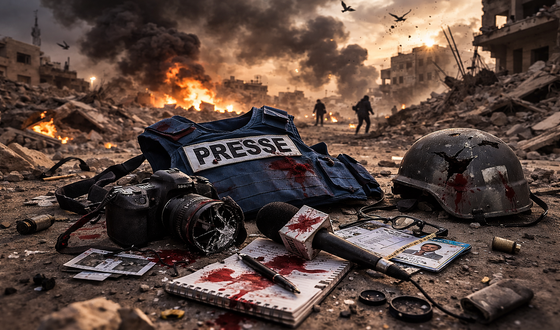
129 journalists killed in 2025, two thirds of which by Israel, according to an American NGO
A report reveals that 129 journalists were killed in 2025, two-thirds of them by Israel, highlighting the growing threat to the press.
WHY READ:
- Understand the impact of violence on journalists in conflict zones.
- Analyze Israel’s role in the repression of press freedom.
- Discover the consequences of these assassinations on world information.
A record total of 129 journalists and media workers were killed in the line of duty in 2025, according to the annual report of the Committee to Protect Journalists (CPJ), an American NGO based in New York. According to this independent organization, nearly two thirds of these deaths are attributed to Israeli fire. A total of 86 journalists were killed by the Israeli army last year. The majority of them were Palestinians working in Gaza. The report also includes 31 media workers who died in a strike on a Houthi media center in Yemen, one of the deadliest attacks against the press ever documented by CPJ.
According to the organization, Israel would also be responsible for 81% of the 47 assassinations of journalists considered deliberately targeted in 2025. CPJ estimates that this figure could be even higher, due to the difficulties of access to Gaza which complicates the verification of information. The Israeli army, for its part, claims to only target fighters and assures that it does not intentionally target journalists. However, she admits to having struck the media center in Yemen in September, calling it a propaganda tool linked to the Houthis.
In several cases in Gaza, Israel claimed to have targeted journalists suspected of links to Hamas, without providing verifiable evidence. International media outlets have disputed the accusations, which CPJ calls “deadly smears.” Israel also prohibits the entry of foreign journalists into the Gaza Strip, which means that all media professionals killed there in 2025 were Palestinian. CPJ notes that the Israeli army has now carried out more targeted killings of journalists than any other government army since its records began more than three decades ago.
Other countries most dangerous for the press include Sudan, with nine journalists killed, Mexico (six dead), Ukraine (four journalists killed by Russian forces) and the Philippines (three dead).
These overwhelming figures reflect a reality that is increasingly difficult to ignore: the methodical destruction of the Palestinian media infrastructure stands out as one of the major blind spots of the genocide carried out in Gaza. By decimating those who document the bombings, forced displacements and civilian casualties, the Israeli army no longer just controls territory, it helps impose an information blackout that hampers the world’s ability to testify, investigate and demand accountability. The massive elimination of local journalists – even though access to the territory is prohibited to the foreign press – raises with unprecedented acuteness the question of a war conducted out of sight, where the right to inform itself becomes a target.
