
Oil: how Trump and Netanyahu’s strategy is enriching Iran
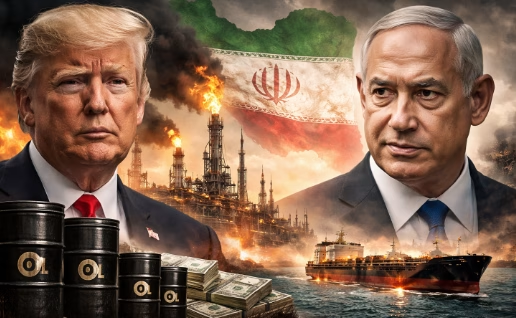
The economic columnist of BFM TV, Emmanuel Lechypre, estimated that “the big winner” from the current tensions in the Middle East is Iran, due to the increase in its oil revenues. According to him, Iranian exports reached around 1.8 million barrels per day in March, a level higher than the average of the previous three months. “Contrary to popular belief, Iran has exported more oil,” he said.
Oil in particular continues to transit through the Strait of Hormuz, largely destined for China. At the same time, the regional situation has led to an increase in crude prices, due to disruptions affecting this strategic passage through which approximately 20 million barrels per day pass. “Iran not only sells as much, but sells more expensively,” underlined Emmanuel Lechypre, adding that this double dynamic mechanically increases the country’s income.
The editorialist also mentions a relaxation of American constraints on certain stocks of Iranian oil, allowing their flow from supertankers. To this would be added rights of way in the area, also contributing to revenues. In total, “on oil revenues, Iran is really winning at the moment,” he concluded.
Oil: how Trump and Netanyahu’s strategy is enriching Iran pic.twitter.com/Pr0rvXto4g
— Oumma.com (@oumma) March 30, 2026
Editor’s note: The observation is implacable: the strategies pursued by Donald Trump and Benjamin Netanyahu appear today to be a resounding failure in view of their stated objective of weakening Iran.
By relying on maximum pressure, sanctions and regional escalation, these two leaders actually helped create the conditions for an economic strengthening of the Iranian regime. The rise in oil prices – directly linked to the tensions they have fueled – offers Tehran an unexpected financial windfall. This blatant contradiction reveals a profound strategic failure. Far from containing Iran, these policies have consolidated its resources, while accentuating regional instability. For many observers, this is a typical illustration of short-sighted diplomacy, incapable of anticipating the systemic effects of its own decisions.
Even more serious, this logic of permanent aggression was accompanied by a considerable human cost in the region. Bombings, destruction and prolonged tensions have aggravated already dramatic crises, without producing the expected political results. In the end, far from weakening Tehran, this strategy paradoxically strengthened it — while leaving behind a region more unstable, more violent and more fractured than ever.
