
United Kingdom: Zia Yusuf, “patriotic Muslim”, face of a far-right project against migrants and Muslims
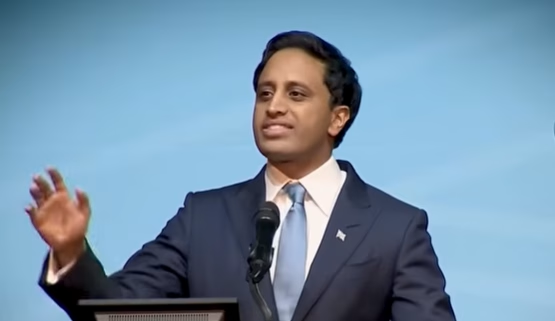
- Understanding Zia Yusuf’s rise within Reform UK.
- Discover his controversial proposals on immigration and Islam.
- Analyze the evolution of the extreme right in Europe.
Zia Yusuf is a leading figure in Reform UK, a far-right party led by Nigel Farage. He could become interior minister if the party comes to power. Aged 39, this millionaire entrepreneur comes from an immigrant family from Sri Lanka. He presents himself as a “patriotic British Muslim”. Zia Yusuf defends a very hard line on immigration. He speaks of a “catastrophic” situation in the United Kingdom and evokes a risk of tensions between communities.
His program is radical. He wants to organize mass expulsions of migrants, call into question fundamental rights and remove the country from certain international treaties. It also directly targets Muslims. He speaks of a “threat” linked to Islam and wants to limit certain religious practices. In particular, he proposes to prevent the transformation of churches into mosques. A highly contested idea, because this phenomenon remains marginal in the United Kingdom.
Zia Yusuf also defends the promotion of Christianity in society. A position which is part of an increasingly present identity rhetoric on the right. His alarmist statements about an alleged risk of “sectarian violence” are criticized. For its opponents, they stoke fears and divide the population.
In his speech, he also denounces asylum seekers living in state-funded housing. He believes that the system is “abused” and calls for an immediate tightening of reception conditions. He also wants to remove the United Kingdom from certain international conventions, particularly on human rights. A measure that worries many organizations. Another proposal: strongly strengthen border controls and increase police powers. Here again, its opponents denounce a security drift. The Labor government denounces a dangerous project. He accuses Reform UK of attacking migrants and weakening social cohesion.
Within the party itself, certain tensions exist. Zia Yusuf once left office before returning, after internal disagreements and racist attacks online. Despite the controversies, he remains a central actor in this far-right party. His profile is used to defend a hard line, while trying to defuse accusations of racism. For its detractors, this strategy above all masks a brutal program against foreigners and minorities, particularly Muslims.
The case of Zia Yusuf illustrates an evolution of the European extreme right. Some parties put forward figures from immigrant backgrounds to make very harsh speeches on Islam and migrants. This strategy makes it possible to legitimize radical policies, while blurring criticism. It also makes it possible to give a more “acceptable” image to old ideas: rejection of immigration, hierarchization of cultures and questioning of certain religions. But fundamentally, the project remains the same: massive toughening, questioning of the rights and stigmatization of part of the population, in an increasingly explosive political climate in Europe.
