
United States: according to a study, the rise of Islamophobia has serious psychological consequences
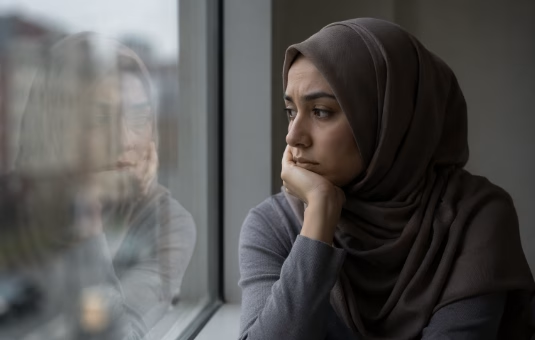
In an article published on The Conversationan independent online media recognized for the rigor of its analyzes written by academics, Anisah Bagasra, associate professor of psychology at Kennesaw State University, affirms that the war with Iran is accompanied by a sharp increase in Islamophobic discourse in the United States, including in the political field. The author points out that several political leaders have recently made openly hostile remarks towards Muslims on social networks, helping to trivialize stigmatizing rhetoric. According to a cited study, the number of Islamophobic publications on the X platform increased from around 2,000 to 6,000 per day in the first days of the conflict.
Anisah Bagasra explains that this phenomenon is part of a broader trend: Islamophobia tends to increase during international crises, electoral campaigns or attacks. It recalls in particular the waves observed after the Syrian refugee crisis in 2015 or during Donald Trump’s presidential campaign in 2016, a period during which Muslims were frequently presented as a security threat. The author also indicates that social networks and certain media play an important role in the dissemination of negative representations, often associated with terrorism. She claims that this rhetoric is accompanied by an increase in acts of hatred, with several hundred incidents recorded in some years.
On the health front, Anisah Bagasra emphasizes that Islamophobia has lasting effects on the mental health of American Muslims. She explains that repeated discrimination is associated with higher levels of depression and feelings of exclusion. According to its research, some of the people affected change their online behavior or withdraw from social networks to avoid attacks. The academic adds that this distrust extends to the health system. She indicates that many Muslims fear bias from professionals, which can dissuade them from seeking care, both physical and psychological.
She also specifies that this distrust has translated, in certain cases, into a drop in use of routine care and an increase in visits to emergency rooms, particularly after political measures targeting predominantly Muslim countries. This situation illustrates, according to her, the indirect but concrete effects of policies and the social climate on health behaviors. According to The Conversationthese pressures also have direct psychological consequences: increased anxiety, chronic stress and feelings of insecurity are frequently reported by American Muslims. The article highlights that repeated exposure to hostile and dehumanizing discourse can permanently weaken mental well-being and reinforce a feeling of exclusion within society.
Finally, Anisah Bagasra underlines that initiatives are being developed to respond to these issues, in particular through the training of health professionals, the development of adapted resources and better awareness of mental health issues within the communities concerned. She insists on the need for collective awareness to reduce Islamophobia and better support a population that she describes as particularly vulnerable.
