
London: Muslims support attacked synagogue
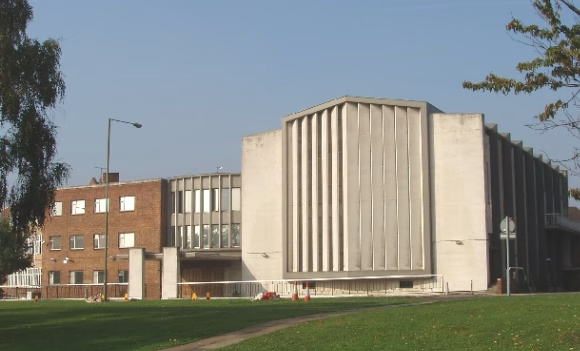
In London, after an attempted fire targeting a synagogue in Finchley, members of the Muslim community came to support the Jewish faithful. This gesture is based on a history of mutual aid: the synagogue had welcomed this Muslim community for several years after the fire in their center. Their presence was hailed as a strong symbol of interreligious solidarity.
The attack, which occurred during the week, was described as an anti-Semitic crime by the authorities. It comes in a context of an increase in anti-Jewish acts in the United Kingdom, causing concern and strengthening security measures around places of worship. Despite this tense climate, religious leaders and faithful insisted on their desire to remain open and united. This rapprochement between Muslim and Jewish communities is presented as an example of resilience in the face of tensions and divisions. At the service organized after the attack, the synagogue welcomed many guests, including politicians, representatives of other religions and residents of the neighborhood. The presence of the Muslim community, who came with messages of support and donations of food, particularly made an impression. This outpouring of solidarity echoes a long-standing cooperation between the two groups, built over the years around social activities and local mutual aid. Officials recalled that these links go beyond religious differences and are based on common values of support and coexistence.
This episode shows a phenomenon often less visible in the news: concrete cooperation between religious communities in the face of acts of hatred. While identity tensions are sometimes highlighted, these gestures of solidarity show that at the local level, lasting links can be built and resist crises. They also help to counter the logic of division by giving visibility to alliances based on shared experience and reciprocity.
