
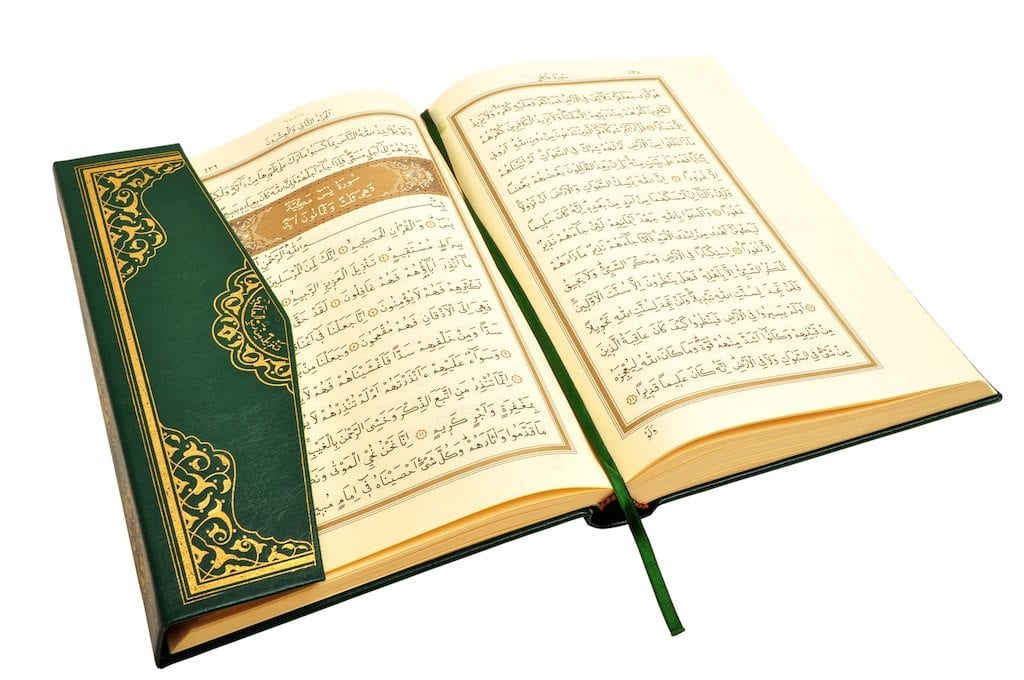
Overview of modern Muslim thought
The Muslim reformist movement of the 19th century revived religious intellectualism, but remains little-known in France.
WHY READ:
- Understand the impact of reformism on modern Muslim thought.
- Explore the challenges facing contemporary Muslim intellectuals.
- Discover the debates around the interpretation of the Koran and hadiths.
The reform movement begun in 19th century Egypt, known as the nahda (renaissance), marked the return of Muslim intellectualism to the religious sphere – intellectualism eclipsed for nearly 10 centuries by a widespread conservative movement among the ranks of the ulama. But this return to an independence of approach regarding theological reflection is still very little known among Muslim populations.
In France, it is common to meet Muslims who do not know a reformist thinker or an unlabeled Muslim intellectual. Very rationally, this can be explained by the absence or weakness of literary publications translated into French. The risalât-at-tawhîd of Muhammad Abduh, for example, has not been published for around ten years. No one has yet undertaken the translation of Tafsir al-manar, the only (unfinished) exegetical essay of the 20th century. As for contemporary authors translated, the number of copies is often limited or quite simply, their reading puts off a public misled by the excessive diffusion of popular literature.
However, the central question posed by these Muslims in search of a religious and social identity at the same time is exactly the one that reformists and other intellectuals in Muslim countries asked themselves and still ask themselves: How to live one’s faith in our times?
The response that intellectuals will provide and those that will be provided by the proponents of orthodoxy differ profoundly.
Where dogmatic discourse explains the faith by modeling a community based on the writings of classical authors, thus promoting taqlid*, modern Muslim intellectuals endeavor to explain that it is not nostalgia for a bygone era which should allow the strengthening of the faith but on the contrary the search for new interpretative elements of religious law according to the new data developed by a stormy contemporary history.
One of the first great thinkers to have promoted the idea of a global overhaul of Muslim theology and claimed the right to non-use of taqlid was the Grand Mufti of Egypt Muhammad Abduh (1849-1905). In his risalât-at-tawhîd (Epistle on divine unity) he puts forward a reflection which gets rid of apprehensions regarding scholarly opinion to treat in depth subjects hitherto subject to very strict control. This is how he brings up to date the great controversy which had opposed the Asharites to the Mu’tazilites for four centuries in the classical period: the Koran, a created and not uncreated text.
Even if in his second edition, for some unknown reason, he returns to the thesis of the uncreated Koran, his study will considerably influence generations of intellectuals to come. The simple fact of thinking that the truths established today on the nature of the Koran or on the invulnerability of hadiths are in reality the fruit of perfectly human reflections, of contextual interpretations resulting from the reasoning capacities of human beings leads the Egyptian Nasr Abou Zayd and the Iranian philosopher Abdul Karim Soroush to claim the right to reopen theology based on the importance of the historicity of interpretations.
Abdul Karim Soroush thinks, for example, that the history of Islam must be perfectly known in order to understand the reasons for current religious policies and understand the foundations of the doctrines which monopolize the notion of truth.
Without this deep knowledge, the Muslim is therefore led to believe in the sacred aspect of what is in reality only speculation. This is largely for this reason that it is still very difficult to calmly address certain basic questions.
This particularly concerns the sciences of hadith whose argument of authority is based on the chains of transmission. A chain composed of trustworthy men and never broken would guarantee the truth of a prophetic word. Likewise, a very large number of transmitters would be proof of its authenticity.
According to a rational approach, such arguments appear very weak and cannot be the criterion for selecting good and bad hadiths. In this case, the Egyptian Rashid Rida (1865-1935), disciple of Muhammad Abduh, established in his writings the principle that it was not the form which made it possible to establish their authenticity but their content and their coherence with the Koranic text.
Even today, this questioning of the sciences of hadith does not fail to revolt the classes most anchored in the fixation of classical theological principles. Muslim thinkers who engage in this type of exercise face very great risks in their country. Nasr Abou Zayd, who supported the importance of reestablishing the historicity of the Koranic text in order to understand it according to a vision more in line with our reasoning abilities, was forced into exile and divorced from his wife, being accused of apostasy.
Even more serious was the assassination of the Sudanese theorist Mahmoud Taha who questioned the strict application of Shari’a, establishing that it was a post-prophetic measure which must therefore follow the advances and new problems of Muslims, generation after generation.
In short, what modern Muslim intellectuals are demanding is consideration of the phenomenon of historical movement which alone is capable of making the Koran a living word. Abdul Karim Soroush, the Tunisian Muhammad Talbi, the Syrian Mohamed Shahrour and many others evoke the idea that the Koran does not speak if we do not question it.
However, all questions essentially concern problems specific to a given era and a given community. The questions are not necessarily the same or do not have the same purposes from one era to another. Questioning the Quran therefore does not mean questioning classic exegeses but, on the contrary, creating new ones and keeping the theological domain open, thus preventing the Quran from being nothing more than a manual of prescriptions and duties to accomplish.
What particularly frightens those who are resistant to modern thought is the idea of a desacralization of the divine word, of a diminution of Islam. To this, Muhammad Iqbal responds that the debate should not arise so much on the elements that policies provide, namely a conflict between Islam and modernity, but rather on the way in which Islam can answer the questions of modernity.
In this, he is joined by Nasr Abou Zayd who highlights the importance of considering classical writings as a heritage which must be used but which must never remain more than a heritage, therefore implying the idea of an intellectual suite in which the Muslim must be able to find his personal comfort.
*Taqlid: imitation
Bibliography:
Muhammad Abduh – Risâlat-at-tawhîd (1897)
Abdul Karim Soroush – Theory of the complementarity of religious knowledge (1990)
Nasr Abou Zayd – The concept of the text (1987)
Nasr Abou Zayd – Critique of religious discourse (1999)
Rashid Rida – Tafsîr al-manâr (1st half of 20th century)
Mahmoud Taha – Ar-risâla athânia minal-islâm
Muhammad Talbi – Plea for a modern Islam (1998)
Muhammad Iqbal – Reconstructing religious thought in Islam (1955)
