
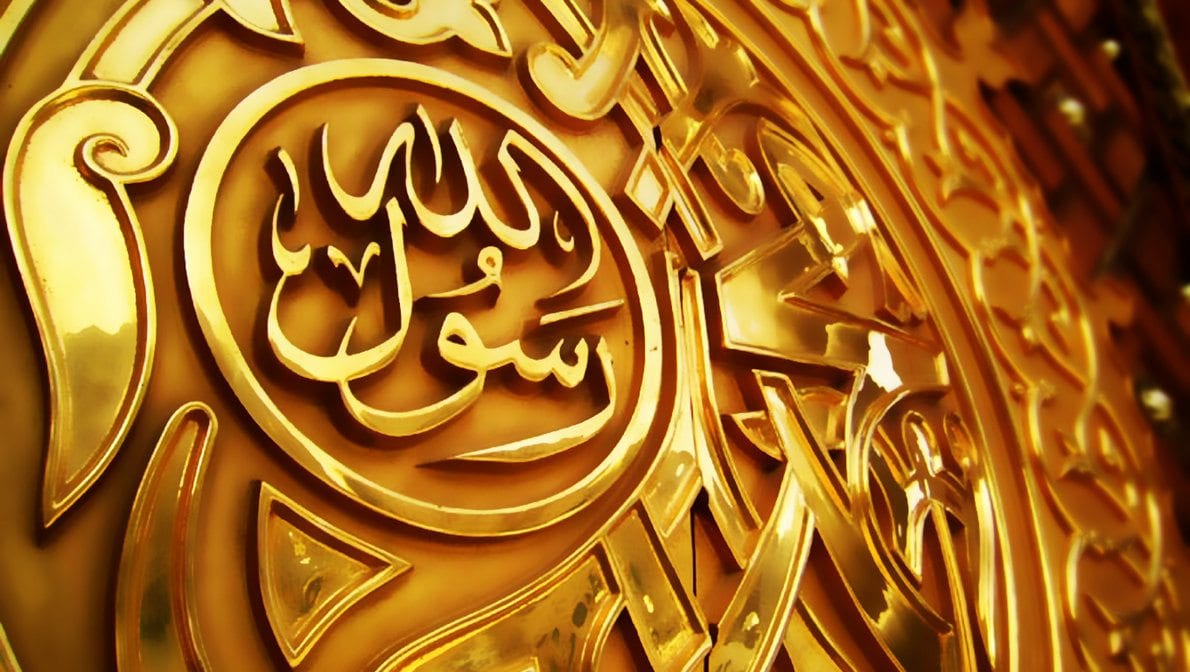
Muhammad, the prophet of mercy
- To understand the importance of the Prophet’s teachings in the lives of Muslims.
- To reflect on the teaching methods of the Prophet’s life and their impacts on younger generations.
The Prophet occupies a unique place in the consciousness and lives of Muslims around the world. He is our model, our example to follow and our compass on the path that leads to God: “You certainly have in the messenger of God, such a beautiful example for him who hopes in God and on the day of judgment” (Quran 33/21).
The Prophet Muhammad was indwelt by God and imbued with His presence. He lived only by HIM and for HIM. Despite the sometimes mind-blowing magnitude of the adversities he would constantly face, the battles he had to wage against his enemies, the demands of his companions who had to be helped, guided and sometimes defended and despite all his other numerous and varied occupations, he found time to spend part of his nights not resting but crying, meditating and praying. His ankles were swollen and stained with blood from his endless nightly prayers (1). He prolonged his prostrations so much that sometimes people thought he was dead (2). Worried about him, ‘Aisha, his wife said to him one day: “Aren’t you exaggerating a little when God has forgiven all your sins”: “I try to be a worthy servant and worshiper of God, to thank HIM and to give HIM (3) an honor worthy of HIM”, replied the prophet.
The Prophet Muhammad was deeply committed to peace. Arriving in Medina in 622, after years of persecution and tension, his very first words confronted Muslims with their fundamental responsibilities: “Spread peace, give food to those who are hungry, honor family ties, pray while people sleep, you will enter paradise in peace,” he said to the many Muslims who came to welcome him. Almost all of the prophet’s spiritual teachings are contained in these short sentences.
The Prophet Muhammad was infinitely gentle and profoundly tender. He was elegant, courteous, approachable, open-minded, natural, welcoming and caring. One day, a man asked him: “O messenger of God! If I commit a sin, will it be recorded (in the register of bad deeds)? It will be! Answered the Prophet. What if I repent of it? It will be erased, says the prophet (Psl). And if I commit it again? It will be recorded, he said. And if I repent of it? It will be erased, says the prophet (Psl). And if I commit it again? It will be recorded, he said. And if I repent of it? It will be erased, said the prophet (Psl).
The Prophet Muhamed was very respectful of religious diversity which the Koran considers to be a Divine will (4). As soon as he settled in Medina, he drafted a pact establishing relations between Muslims and other communities (5): “They have the same rights and the same duties as us”, and called for fundamental respect for other believers: “Whoever harms a Christian or a Jew will be my enemy on the Day of Judgment.”
It is for all these reasons that we must love the prophet more than ourselves. This love, considered as an act of worship, allows us to give meaning to our lives, to fight on a daily basis against the most negative forces in our being and to live in peace with others, Muslims or not, believers or not.
Unfortunately, when I was young, most of the biographies of the Prophet (PBUH) available on the market and used by my Islamic education teachers at the mosque and school, only recounted the military campaigns of the Prophet (PBUH). We had to learn by heart the dates of the battles, the details of the fighting, the number of deaths on the Muslim and non-Muslim side, the prisoners…
From this period, I retained of the prophet, the image of a warrior man brandishing his sword and perfectly handling his bows and arrows. The dimensions of peace, love, mercy, forgiveness, inner struggle, spirituality and respect for religious diversity cited above, were completely obscured, more through ignorance and lack of awareness than through strategic calculation.
More than 20 years later, we continue to teach here and there the life of the prophet to children and adolescents with the same methods, the same speeches and therefore the same errors. We instill in them the culture of prohibition and victimization, we lock them in dogmatic fences and taboos which are only human constructions and in doing so we isolate them little by little to the point of disconnecting them from the reality of their country. We know the result.
There is no question here of generalizing, nor of simplifying too quickly certain complex and complicated issues, but we must recognize that many mosques, Arabic language and Islamic education schools, are unfortunately still faced with this situation with disastrous consequences for the future of our children.
Today, the concerns, speeches and actions of Muslim leaders are all linked to the training of imams. This training is certainly necessary, even essential, but how insufficient it is.
Muslim thinkers, intellectuals and theologians in France must fully assume their responsibility in the face of history. They must learn to respect each other, to debate and to work together to review in particular the books which deal with the life of the prophet and which betray the teachings transmitted by the prophet of mercy.
Notes:
(1) Bukhari
(2)Bayhaqi
(3) Bukhari
(4) Quran 48/5(5)
(5) Jews and Christians
