Halal certification: joint advice between Indonesia
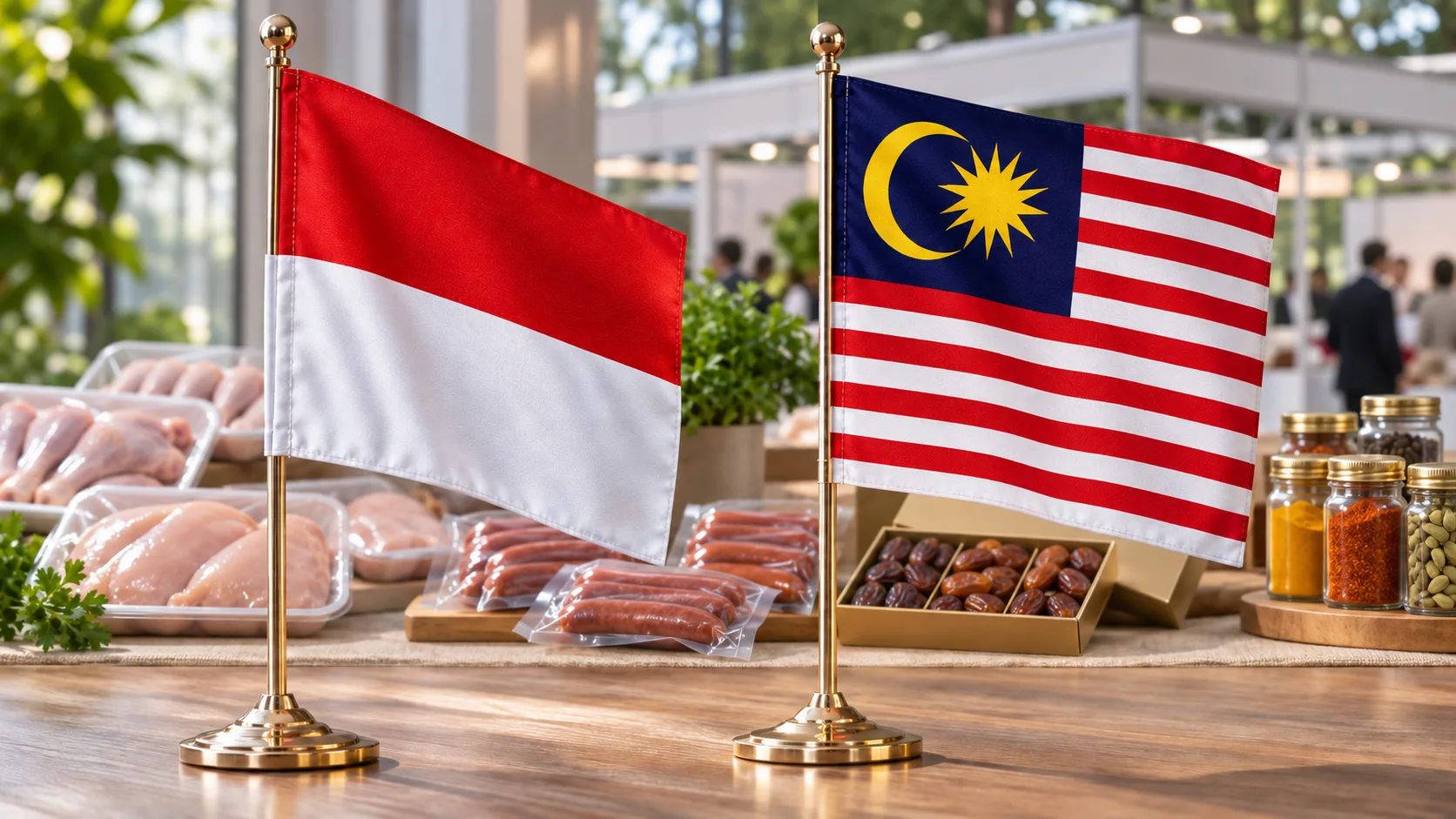
According to the ANTARA news agency, the project was discussed on November 10 in Jakarta during a meeting between the Indonesian agency responsible for halal certification (BPJPH), the Malaysian Department of Islamic Development (JAKIM) and the Malaysian Embassy.
The two countries agreed on a framework document, Mohd Izwan Sharif, first secretary in charge of religious affairs at the Malaysian embassy, confirmed two days later to the Malaysian agency Bernama. JAKIM must now present it to the Malaysian government. The meeting was co-chaired by Sirajuddin Suhaimee, director general of JAKIM, and Ahmad Haikal Hasan, who heads BPJPH. It followed a first online working session on October 27.
The future council would be named Malaysia-Indonesia Halal Council (MINDHaC). It would allow the two organizations to work more closely on halal guarantees. Jakarta and Kuala Lumpur also hope that this cooperation will eventually be extended to other countries in Southeast Asia. For Ahmad Haikal Hasan, this bilateral council is a first step towards an ASEAN halal council, expected for September 2027.
The project is not new. The Malaysian Deputy Prime Minister, Ahmad Zahid Hamidi, announced this on September 25 in Kuala Lumpur, during the Global Halal Summit organized during the MIHAS exhibition. It extends a protocol signed on June 8, 2023 on the mutual recognition of halal certificates. According to Sirajuddin Suhaimee, the new council must go further: facilitate trade, remove barriers to market entry and better connect the two countries’ supply chains.
Malaysia, a pioneer in state certification
If Malaysia carries so much weight in this partnership, it is because it got ahead very early. Since 1974, an Islamic affairs division attached to the Prime Minister’s office has issued halal certification letters. In 1997, this division became a department in its own right: JAKIM. A 2011 law reinforced this monopoly: only JAKIM and the religious councils of Malaysian states can certify a halal product and affix the official logo to it.
This label guaranteed by the administration has made Malaysia a world reference in the sector. JAKIM also maintains a list of foreign organizations whose certificates it recognizes, more than 80 spread across nearly 50 countries. For a foreign manufacturer, going through one of them remains the condition for selling its products under the halal label in Malaysia.
Indonesia is catching up
Indonesia has the largest Muslim population in the world, but it is not an Islamic state: its Constitution, based on Pancasila, recognizes six religions. For thirty years, halal certification was ensured by a religious organization, the LPPOM institute of the Ulema Council of Indonesia (MUI), created in 1989. The State only took control with a 2014 law, applied from October 17, 2019. Since then, the BPJPH has issued the certificates, after the audit of an approved inspection body and a religious opinion from the MUI.
The schedule then accelerated. Since October 18, 2026, almost all food and drinks sold in the country, including imports, must be certified halal or marked “non-halal”. The obligation also affects cosmetics, food supplements and some consumer goods. “There is no postponement,” warned Ahmad Haikal Hasan at the beginning of October. According to ANTARA, more than 9.6 million products were certified in 2025. By joining forces with JAKIM, Jakarta is banking on Malaysian experience to make its immense domestic market an export force.
What changes for exporters and consumers
For French, European and North African exporters, one of the issues concerns the supporting documents to be provided. Each country now maintains its own list of recognized foreign organizations: Indonesia had 87 in 32 countries in mid-2025, before adding four in February 2026. Will a company that wants to market the same product in both countries be able to use the same documents? The project remains under discussion and no simplification of procedures has yet been announced.
On the consumer side, the question arises in front of the shelves. In Malaysia, for example, a customer who buys an Indonesian product may discover a halal logo on the packaging that he is unfamiliar with. Better coordination could help it identify the organization that certified the product and understand the guarantees associated with this label.
