Muslims of Europe: the great paradox of integration
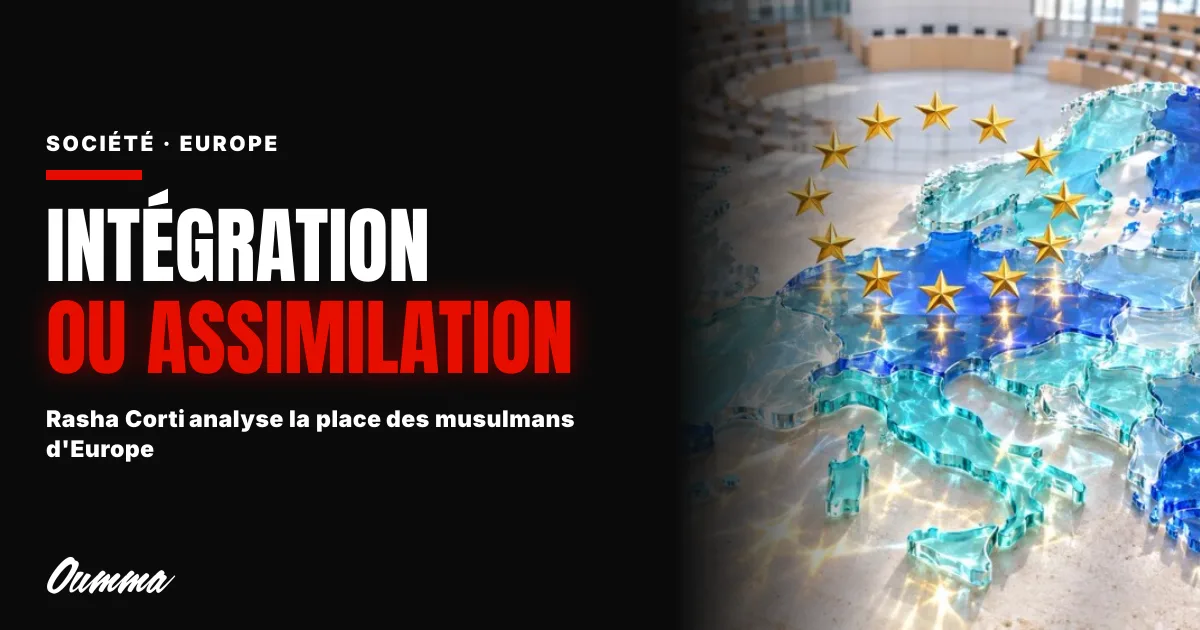
Rasha Corti knows the Austrian debate from the inside. She sits on the expert council on integration at the Austrian Chancellery and has led projects in favor of the autonomy of refugee and immigrant women. His article, Europe’s Muslim Integration Paradoxappeared on GIS Reportsthe Geopolitical Intelligence Services website. Founded in 2011 by Prince Michael of Liechtenstein, this organization publishes geopolitical analyzes intended for political and economic leaders.
In Germany, nine years after the arrival of refugees
What happened to the refugees who arrived in Germany in 2015? In 2024, 64% of them were employed, compared to 70% of the population as a whole. Rasha Corti attributes part of this progression to time spent in the country. It also underlines the effect of very concrete decisions. Having a diploma obtained abroad recognized or accessing training can change the course of a professional life.
However, this average covers two very distinct realities. Among these refugees, 76% of men worked, compared to only 35% of women. In Austria too, women from Afghan, Syrian or Iraqi families remain largely excluded from employment. These figures are worth paying attention to, as long as you keep in mind who they describe. The journey of a woman who had to flee her country provides little information on that of a Muslim citizen born and educated in Vienna.
Growing up in Europe and keeping the faith
In Vienna, Muslim students represented 42% of the enrollment in public schools subject to compulsory education in 2025-2026. For these children who grow up in the same schools as their peers, what does “integrate” mean? In public debate, we often hear the idea that over generations, religion will eventually occupy less space. The French data cited by Rasha Corti invite us to qualify this expectation.
According to an Ifop survey carried out in 2025, 87% of Muslims questioned aged 15 to 24 say they are religious, compared to 80% of all Muslim respondents. Another question brings up a sharing. In the event of a conflict between a religious rule and French law, 49% say they give priority to the law and 44% to the religious rule. You still need to read these responses for what they are. The respondents decide on a hypothetical conflict. We don’t know what situation everyone had in mind when responding.
Who speaks for Muslims?
Rasha Corti observes that conservative religious associations, often better organized, have more relays than liberal or less practicing Muslims. This poses a familiar question in France as elsewhere. When someone is invited to speak “on behalf of Muslims,” who exactly do they represent? The author also evokes the weight of certain family or local expectations on young women, in the choice of their studies as in their personal life.
The feeling of belonging is also played out in the eyes of others. When you grew up in Europe and are still asked where you are “really” from, religion can offer a form of recognition that is difficult to find elsewhere. This is where the example of the elected official with the headscarf takes on its full meaning. Her voters can discuss her decisions, challenge her ideas or judge her on her record. If her outfit is still enough to make us doubt her place among them, what do we expect of her to consider her, finally, as one of them?
Subscribe to the Oumma letter: our articles, our analyzes and our new programs arrive directly in your mailbox.
Free. One-click unsubscribe. Learn more
