
According to The Telegraph, Saudi Arabia is softening its stance on alcohol, a move already widely seen in many Muslim countries
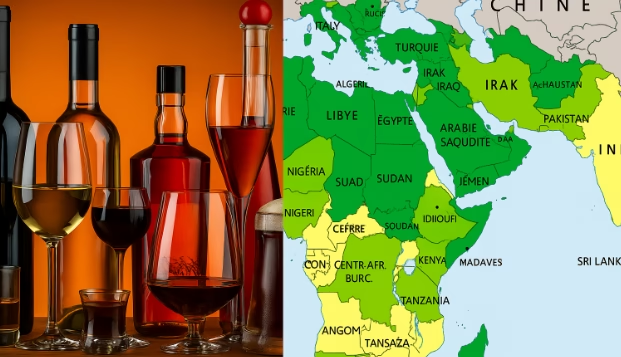
In an article published by The Telegraphone of Britain’s leading news dailies, the newspaper reveals that Saudi Arabia is set to open two alcohol outlets aimed at non-Muslim foreigners, including one within Aramco in Dhahran. According to the daily, this is a cautious development in a country long considered the strictest in the world in terms of prohibition. The Telegraph affirms that this limited opening is not an exception in the Muslim world, but rather an illustration of a much more nuanced reality: in many Muslim countries, alcohol remains accessible despite religious prohibition. The paper highlights that informal practices, local tolerances and historical legacies have maintained persistent consumption.
According to The Telegraphin Pakistan, the ban imposed in the 1970s did not prevent a thriving parallel market. The Murree brewery continues to produce legally for non-Muslim minorities, but also supplies a significant clandestine demand, particularly in large cities like Karachi. In the case of Iran, The Telegraph reports that total prohibition prevents neither smuggling nor artisanal production. The newspaper underlines that despite the severe sanctions, wine and whiskey circulate widely, fueled by cross-border networks and a still living domestic winemaking tradition.
In the Maghreb, the situation is also complex. According to The TelegraphMorocco maintains an active wine industry and controlled distribution in major cities. Tunisia authorizes the sale of alcohol in tourist areas, while in Algeria, local production continues despite regular debates around its legitimacy. In Türkiye, The Telegraph recalls that the country’s secular tradition has long allowed free consumption, embodied in particular by raki. The newspaper, however, notes a recent tightening, marked by an increase in taxes and increasing restrictions, without significantly reducing demand.
According to the British daily, the states of Central Asia – Kazakhstan, Uzbekistan, Kyrgyzstan – present another model: alcohol consumption remains high there, a legacy of the Soviet era, despite the gradual reaffirmation of their Muslim identity. Finally, The Telegraph cites Lebanon as an example of a country where the production of alcohol – wine and arak – remains deeply rooted in the local culture and economy, driven by an ancient tradition and a still active wine sector.
Thus, concludes The Telegraphthe easing observed in Saudi Arabia is not a break. It is part of a regional continuity where, despite formal prohibitions, alcohol has never completely disappeared from the Muslim world, always finding ways to circulate, legally or clandestinely.
