
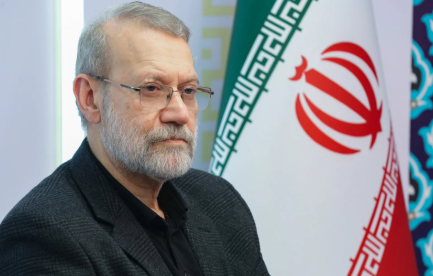
Ali Larijani, a figure likely to count in a transition in Iran
The death of Ali Khamenei opens an unprecedented political phase in Iran, where Ali Larijani could play a central role in a controlled transition.
WHY READ:
- Understanding the issues of succession in Iran.
- Analyze the potential role of Ali Larijani in the political transition.
- Assess the international implications of a managed transition.
The death of the Supreme Leader Ali Khamenei opened a political sequence unprecedented since 1989. If the Constitution provides that theAssembly of experts designates a successor, the reality of Iranian power is based on more complex balances, associating religious authorities, elected institutions, security apparatus and networks of influence. In this phase of uncertainty, the central issue is the system’s capacity to organize a controlled transition rather than suffering internal destabilization.
In any reflection on a possible transition at the top of the Iranian state – whether linked to an internal recomposition of power or to an institutional succession – the central question remains that of balance. The Islamic Republic does not operate on the logic of a single man, but on a dense institutional architecture, where religious legitimacy, security power and political arbitrations intersect. In this context, Ali Larijani appears less as a declared suitor than as a possible point of articulation.
A trajectory inscribed in the continuity of the regime
Larijani’s route passes through several nerve centers of the system. Former president of Majlis (2008–2020), he played a decisive role in mediation between Parliament, the government and other institutional centers. This experience gives him in-depth knowledge of the constitutional workings and balancing mechanisms specific to the Islamic Republic.
He also held the strategic position of secretary of the Supreme National Security Councilthe body responsible for major orientations in matters of defense and foreign policy. In this position, he was involved in sensitive issues, notably negotiations related to the nuclear program and regional dynamics. This dual experience – parliamentary and security – gives him a transversal reading of the system. Close to Ali Khamenei without being identified as an intransigent ideologue, Ali Larijani has gradually established himself as a pragmatic conservative, more of a manager than a tribune.
The springs of possible centrality
If a transition were to begin, formally supervised by the Assembly of Experts, it would in reality depend on a compromise between several centers of power. In such a context, Ali Larijani’s potential strength would lie in a triptych that is rarely brought together. First of all, his institutional legitimacy: as former president of the Majlis, he knows the constitutional balances and internal procedures, which would allow him to evolve with ease in a phase of institutional adjustment.
Then his security credibility: his time with the Supreme National Security Council gave him a detailed understanding of military, strategic and regional imperatives, a determining element in a country where security issues largely structure political decisions. Finally, his relative acceptability: without being outside the conservative camp, he is not perceived as the leader of a radical faction. This intermediate position could facilitate the search for a compromise between clergy, security apparatus and civil institutions.
Strategic continuity rather than disruption
It would nevertheless be excessive to see it as a sign of a profound transformation. If Ali Larijani were to play a central role in a possible transition, it would probably be part of a logic of continuity and adjustment, more than a structural rupture. His career demonstrates loyalty to the framework of the Islamic Republic, even when he adopts more flexible positions diplomatically.
On the international level, particularly from the American point of view, a controlled and predictable transition could appear preferable to a sudden collapse of the regime, carrying risks of regional instability, security fragmentation and major uncertainties around strategic issues. The issue is not limited to internal stability: it also concerns the future of the Iranian nuclear program, the development of ballistic missiles and Tehran’s financial and military support for its allied networks in the region.
In this reading, a controlled transition could, from Washington’s point of view, open the way to progressive adjustments – whether this involves strengthened supervision of the nuclear program, a capping or redefinition of ballistic capabilities, or even a reduction in support for allied armed actors. A profile from the system but perceived as pragmatic could thus represent a factor of relative stabilization, capable of negotiation without causing the collapse of a state apparatus whose disintegration would have consequences that would be difficult to control for the entire region.
Ultimately, Ali Larijani’s potential centrality does not lie in a reforming posture, but in his capacity to embody internal stabilization at a time when the balance of Iranian power could be expected to evolve.
