
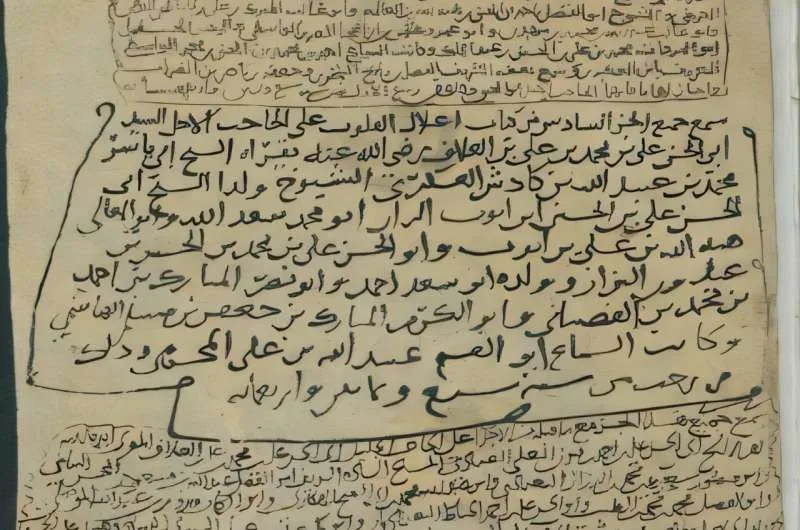
Arabic manuscripts: these still little-studied notes could change our view of the history of Islam
Names, dates, places, sometimes just a few lines… In ancient Arabic manuscripts, the notes written around the text tell a story that has long remained little studied. Researchers from the University of Sharjah looked at these annotations, which allow us to discover how books circulated and who participated in the transmission of knowledge in the Muslim world.
Their study, published in the Journal of Islamic Thought and Civilizationcovers 132 annotations noted in 47 manuscripts dating from the 12th to the 15th century. These works come from great intellectual centers such as Baghdad, Damascus, Aleppo, Fustat, in Egypt, and Isfahan, in Iran. They deal in particular with hadiths – the reported words and deeds of the Prophet Muhammad -, the sciences of the Koran, religion and the arts.
To understand these notes, we must return to the way in which we studied these texts. A work was read aloud in front of a teacher, in the presence of students. These sessions allowed you to listen to the text, check it and learn the content from a teacher. An inscription could then be added to the manuscript to keep track of the reading.
Called samāʿātthese certificates generally specified the name of the master, those of the participants, as well as the date and place of the session. Some also indicated whether the book had been read in whole or in part, and whether the participants had received permission to transmit it in turn. Over the generations, certain manuscripts have accumulated dozens, even hundreds of annotations. The same book can preserve traces of readings in Damascus, Cairo or Jerusalem, sometimes several centuries apart. Historians can then follow his journey and find the links between those who studied him.
These notes also reveal the diversity of the people present. Alongside the scholars appear women, traders and artisans. Some names do not appear in any other known historical sources. These inscriptions therefore make it possible to find people of whom we would otherwise have lost track, and to better understand the place of knowledge in society.
The researchers believe that this documentation could also help identify works that are now lost. But the work remains considerable: many manuscripts are scattered in libraries, still poorly cataloged, and the annotations are sometimes erased or difficult to decipher. The team is calling for them to be listed in databases to allow historians to exploit these testimonies, sometimes as valuable as the texts they accompany.
