
Brazil is banking on halal to develop its food exports
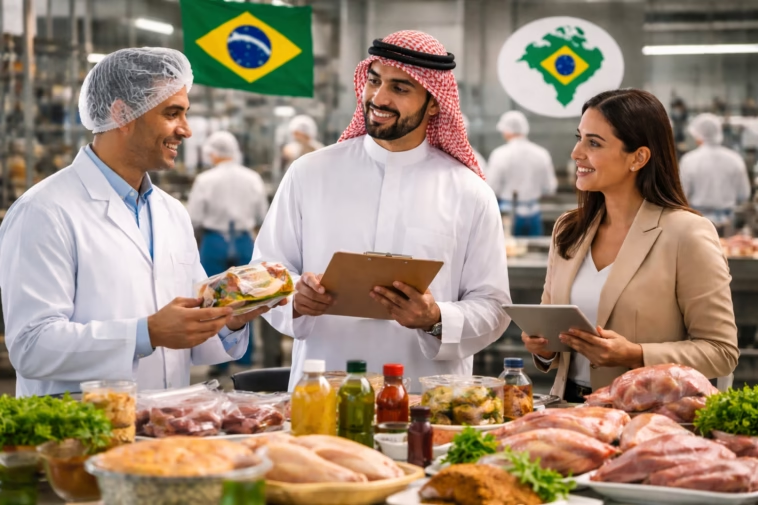
- Understand the importance of the halal market for Brazil.
- Discover training initiatives for exporters.
- Explore economic opportunities linked to halal.
The Halal do Brasil Project launched a free training called “Exploring the Halal Market — Strategies for Exporters”. It is aimed at companies and professionals who wish to export to countries with a Muslim majority. Accessible online, this training aims to simply explain how the halal market works and the opportunities it offers.
Training to understand the halal market
The training is organized into several short, easy-to-follow modules. She explains what halal is, how products should be manufactured and what Muslim consumers expect. It also addresses the economic potential of this market and gives practical advice on how to better sell your products internationally. The Halal do Brasil project is supported by the Arab-Brazilian Chamber of Commercein partnership with theBrazilian Trade and Investment Promotion Agencythe public agency responsible for promoting Brazilian exports abroad. Together, these two institutions support companies in their development in Muslim markets.
Halal products respect the dietary rules of Islam. They do not contain alcohol or pork and must be manufactured according to precise standards, controlled by certification bodies. Today, halal is also seen as a guarantee of quality, safety and traceability by an increasingly wide audience, including beyond Muslim consumers.
Why halal is strategic for Brazil
The global halal market is growing strongly. According to the State of the Islamic Economy Report 2024the halal food market represents approximately 1,880 billion dollars per year. The global Muslim population is estimated at 1.9 billion people, spread across the 57 member countries of theOrganization of Islamic Cooperation.
In this context, Brazil occupies a central place. The country is the world’s leading exporter of halal meats and one of the main suppliers of food products to Muslim countries. This position is explained by the power of its agri-food sector, its large-scale production capacity and its experience in international trade. Brazilian companies have been able to adapt to halal requirements and build lasting relationships of trust with their partners. For Brazil, halal represents a strategic lever to diversify its exports, increase the value of its products and strengthen its presence in booming markets.
By facilitating access to information and training, the Halal do Brasil project also wishes to encourage the participation of small and medium-sized businesses, often less familiar with the requirements of the halal market. Training thus constitutes a first concrete step to prepare for export, better understand cultural and religious expectations, and reduce obstacles to entry into these markets. Ultimately, these actions should contribute to a stronger and more competitive image of Brazilian products internationally, by promoting their quality, their compliance with halal standards and their ability to respond to constantly evolving global demand.
Beyond training, the Halal do Brasil project also offers concrete actions: participation in international trade fairs, meetings between buyers and producers, commercial missions, technical visits and assistance with halal certification. So many initiatives to help companies better understand and integrate the global halal market.
