
France: a proposed law on anti-Semitism denounced for its “amalgamations”
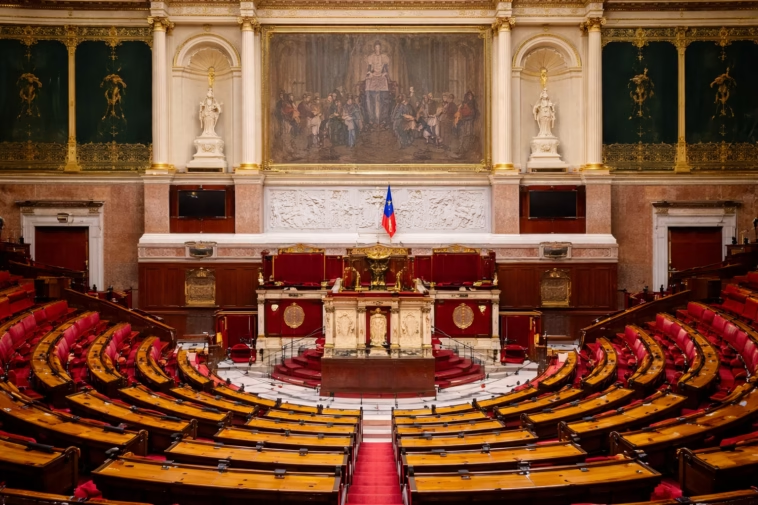
The bill “aimed at combating renewed forms of anti-Semitism”, carried by the MP Caroline Yadanis examined this Wednesday in the Law Committee of the National Assembly. A collective of personalities from the intellectual, associative and artistic world calls on parliamentarians to reject a text that it considers to carry “confusions” and “dangerous amalgamations”.
The signatories recall that the fight against anti-Semitism is “an absolute imperative”, highlighting a marked increase in anti-Semitic acts since October 7, 2023, with “1,676 complaints filed in 2023” and “1,570 in 2024”, including “65% attacks on people”. But they denounce the absence of any reference to the rise of Islamophobia, acts targeting Muslims having increased by “75% in the first half of 2025”, with attacks against “triple” people.
The collective especially criticizes the assimilation made by the text between anti-Semitism and criticism of Israeli policy. The proposed law evokes a “new form of anti-Semitism” fueled by “obsessive hatred towards Israel”. An approach deemed “historically abstruse” and “politically absurd”, because it “confuses racism and the expression of a political opinion”.
According to the authors, this confusion amounts to considering that French Jewish citizens would be “in essence united with the policies of the State of Israel”, which would constitute an assignment of identity contrary to republican principles. They further believe that no law can prevent the historic debate on “the conditions for the creation of Israel” or “the forced expulsion of some 800,000 Palestinians”, described as “legitimate”.
The signatories finally warn of the possible consequences of the text for public freedoms, citing “a considerable alteration of freedom of expression” and the right to demonstrate solidarity with the Palestinian people. They call on elected officials to “reject this text vigorously”, believing that its adoption would pose “a serious risk for individual and collective freedoms”.
Among the first signatories were the writer Annie Ernauxthe former president of Doctors Without Borders Rony Braumanthe geopolitical scientist Pascal Bonifacethe journalist Mona Chollet or even Edwy Plenel.
