
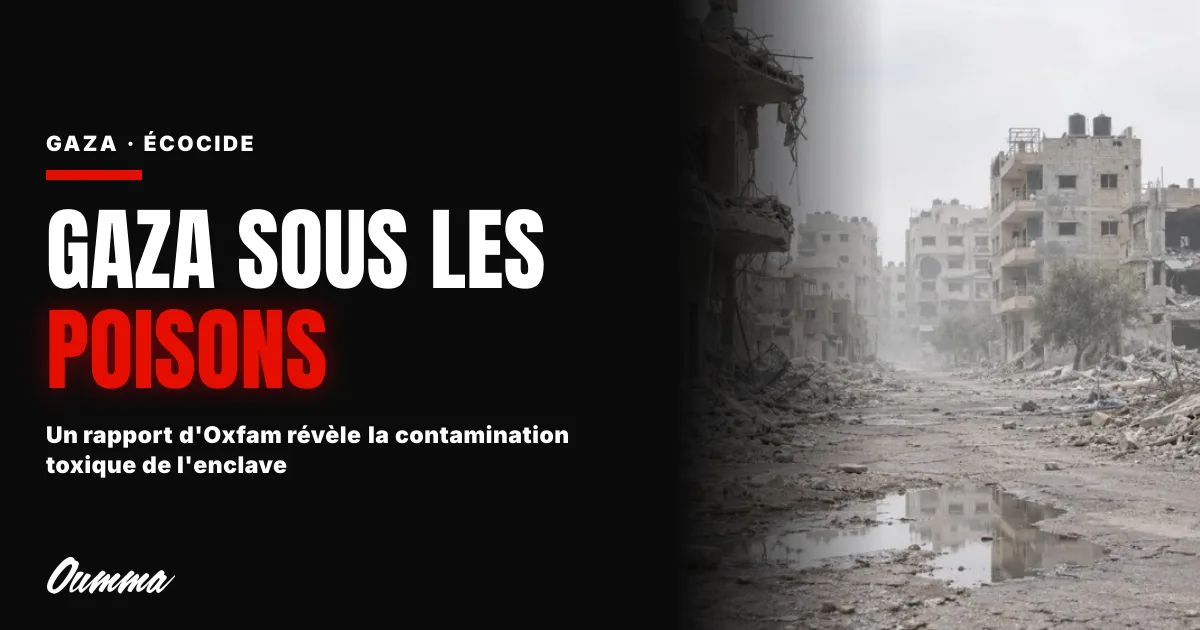
Gaza: Oxfam warns of total environmental disaster
In a report published on November 23, 2026, Oxfam describes Israel’s actions in Gaza as genocide and documents the environmental consequences. This international confederation of NGOs, whose origins date back to 1942 in the United Kingdom, fights against poverty and inequalities and operates in more than 70 countries. She carried out this study with the Conflict and Environment Observatory (CEOBS), a British non-profit organization created in 2018 to document the effects of armed conflicts on the environment and populations. The CEOBS notably contributed to mapping the risks of contamination in Gaza.
Bombs dropped on Gaza represent energy equivalent of approximately 13 Hiroshima bombs
According to Oxfam, the Israeli air force dropped around 6,000 bombs on Gaza during the first five days of bombing, in October 2023. This represents around 4,000 tonnes of munitions, or almost one bomb per minute. Oxfam also cites the UN special rapporteur on the right to housing, who estimates that more than 200,000 tonnes of explosives have been dropped on Gaza in almost two years, the energy equivalent of around thirteen atomic bombs of the type dropped on Hiroshima.
Based on satellite images and geolocated data, the authors estimate that the actions of the Israeli army on the ground affected approximately 78% of the territory. They noted indications of potential contamination in more than 99% of the Gaza Strip. The risks are particularly high in Gaza City, Jabalia, Khan Younes, Rafah and along the Salah al-Din road. Fires and the accumulation of waste also worsen pollution. The United Nations Environment Program estimates the mass of the rubble at around 61 million tonnes. The dust, which may contain asbestos, silica or heavy metals, is resuspended by wind, traffic and clearance. Concentrations of pollutants remain to be measured in the field.
Water, soil and health under lasting threat
Around 85% of water supply infrastructure was damaged or destroyed. Despite emergency repairs, the volume available in April 2026 was only 39% of that before the war. In July, analyzes detected fecal coliforms in 19% of 79 wells tested, compared to 2% of wells examined in 2021 according to the data cited. All sewage treatment plants were destroyed, leading to discharges of untreated wastewater into rivers and the Mediterranean. The destruction of laboratories and restrictions on the entry of analytical equipment limit pollution monitoring.
According to an FAO assessment cited in the report, only 3% of cultivated land was both accessible and intact as of August 2026. The destruction of Al-Qarara’s olive groves and seed bank is jeopardizing agricultural recovery. Livestock and fishing also suffered heavy losses. Oxfam warns of the risk that pollutants accumulated in soil and coastal waters will enter the food chain when production resumes.
The report highlights the burden of respiratory infections and acute diarrhea, particularly among children. In the long term, exposure to certain contaminants increases the risks of chronic respiratory diseases, cancers and developmental disorders. Particularly vulnerable populations include pregnant women, young children and workers clearing rubble.
Oxfam recalls that States have an obligation to prevent genocide. The organization believes that the destruction raises serious questions with regard to international humanitarian law and occupation law. The report examines their possible classification as war crimes and their relevance under the Genocide Convention, particularly when living conditions likely to lead to the physical destruction of a group are deliberately imposed on them. The authors recall that the qualification of genocide presupposes in particular establishing a specific intention to destroy the group, in whole or in part.
Oxfam calls on Israel to lift access restrictions for aid and experts. The organization advocates an independent assessment of the contamination, under Palestinian leadership and with the support of the UN, carried out in parallel with emergency measures. It calls for protecting workers, controlling water and food, decontaminating sites according to measured risks and ensuring sustainable health monitoring. She also asks that the damage be documented for repairs.
Subscribe to the Oumma letter: our articles, our analyzes and our new programs arrive directly in your mailbox.
Free. One-click unsubscribe. Everything you need to know about Umma’s letter
