
Gaza: Ten children lose one or two legs every day depending on the Global Protection Cluster, international humanitarian network
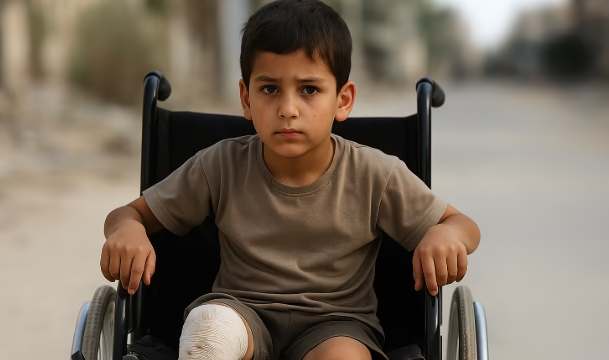
There is no longer any safe place in the Gaza Strip. After twenty months of uninterrupted bombing, the protective environment for people with disabilities and the elderly is in ruins, according to a report Global Protection Cluster (GPC) published this week.
The GPC, a network of NGOs, UN agencies and humanitarian actors mandated by the Permanent Inter-Agence Committee (IASC) and coordinated by UNHCR, works in particular in child protection, the fight against gender-based violence, the right to housing, land and property, as well as action against mines. In his latest report, he alerts the total collapse of the protection mechanisms in Gaza.
The human record is overwhelming: more than 134,000 people, including 40,500 children, have been injured since the start of the conflict. Among them, 25 % are now suffering from new handicaps requiring prolonged rehabilitation care. Each day, ten children lose one or two legs, while more than 35,000 people have undergone hearing lesions due to explosions. Medical infrastructure no longer holds. Less than half of the hospitals are partially functional. Systematic attacks on care centers, ambulances and staff killed 1,580 caregivers and 467 humanitarian workers. Emergency rehabilitation units are destroyed, precipitating the collapse of the health system.
The most vulnerable people pay the high price: 83 % of people with disabilities have lost their assistance devices, and 80 % of the elderly lack medication or medical equipment. Access to aid is hampered by severe restrictions and militarized distribution points operated by “Gaza Humaninian Foundation”, which expose civilians to fatal risks.
The report identifies five major risks of protection for people with disabilities and elderly: direct attacks on civilians, discrimination, sexist violence, psychological abuses, and the massive presence of unploded ammunition under 50 million tonnes of rubble. Despite destruction and forced trips affecting 90 % of the population, Palestinian NGOs and people with disabilities remain on the front line of humanitarian aid. They are pursuing their field work as best they can, offering inclusive and localized responses.
