
In Los Angeles, music mobilizes for Gaza and Sudan
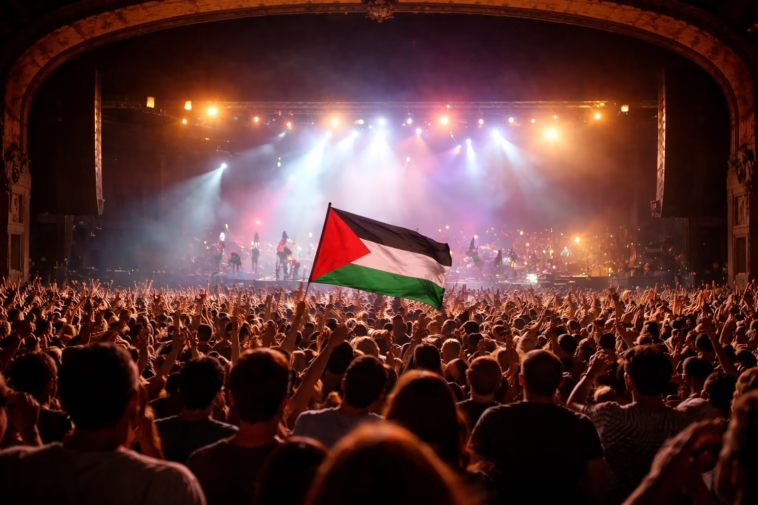
Saturday evening, the Shrine Auditorium in Los Angeles hosted Artists For Aida charity concert dedicated to international solidarity. Co-hosted by the model Bella Hadid and the actor Pedro Pascalthe evening aimed to support humanitarian aid intended to Gaza and at Sudanin a context marked by prolonged and largely marginalized crises in Western media space. At the initiative of the event, the Canadian-Sudanese singer Mustafa claimed a deliberately calm approach, centered on empathy and concrete help rather than on frontal political speeches. In front of an attentive audience, he recalled that the strength of artists also lies in their ability to broaden the field of compassion, far from divisions and partisan slogans.
On stage, musical diversity was there. Shawn Mendes, Omar Apollo, Clairo, Raphael Saadiq, Lucy Dacus and Jazmine Sullivan followed one another, offering performances that were sometimes intimate, sometimes collective. The appearance of Chappell Roan provoked a strong reaction from the room, reinforcing the feeling of communion that ran through the evening. Without spectacular effects or thunderous positions, the concert offered a breather from the brutality of current events, letting the music carry a message of dignity and solidarity. At the end of more than four hours of show, more than 5 million dollars were raised, for the benefit of organizations helping Palestinian children and Sudanese medical structures.
Taken as a whole, Artists For Aid testifies to a significant evolution of contemporary cultural engagement. In a climate where any words on Gaza or Sudan are quickly disqualified, caricatured or exploited, the choice of a strictly humanitarian register seems accepted. By putting aside polarizing formulas, the organizers have shifted the center of gravity towards the essential: civilians, care, survival. This circumvention of political fault lines also says something of the times: faced with the impotence of States and the crumbling of international law, it is sometimes artists and civil society who still try to maintain a common moral horizon.
Bella Hadid and Pedro Pascal hosting the ARTISTS FOR AID benefit concert in Los Angeles. pic.twitter.com/OOsc2ER90j
— Pop Crave (@PopCrave) January 11, 2026
