
Ramadan and travel: Lonely Planet, a tourism reference, highlights an enriching cultural experience
- Discover how Ramadan enriches the traveler experience.
- Learn the rules to follow when traveling.
- Explore the community and cultural dimension of this sacred month.
The international travel guide Lonely Planet, a world reference in tourism and travel content publishing, has published an article dedicated to traveling in Muslim-majority countries during the month of Ramadan. He reminds us that this period can constitute a strong cultural experience for non-Muslim travelers, provided they respect religious and social practices. Lonely Planet recalls that Ramadan is the ninth month of the Muslim calendar and that it commemorates the revelation of the first verses of the Koran to the Prophet Muhammad. Based on the lunar calendar, its start depends on the observation of the crescent moon, which explains the variable dates depending on the country. In 2026, the holy month should begin around February 17 and end around March 19.
The site claims that Ramadan is not just about fasting. If it is marked by abstention from food, drink, tobacco and sexual relations from sunrise to sunset, it is above all a time of prayer, spiritual reflection and charity. Fasting, one of the five pillars of Islam, is obligatory for adult Muslims who are able to do so.
Changed pace of life
Lonely Planet clarifies that non-Muslim travelers are generally not required to fast, but should comply with local rules. In many countries, eating, drinking or smoking in public during the day is prohibited. However, these restrictions vary depending on the destination. In some tourist-heavy Gulf cities, such as Dubai, restaurants remain open during the day, while other regions have stricter regulations.
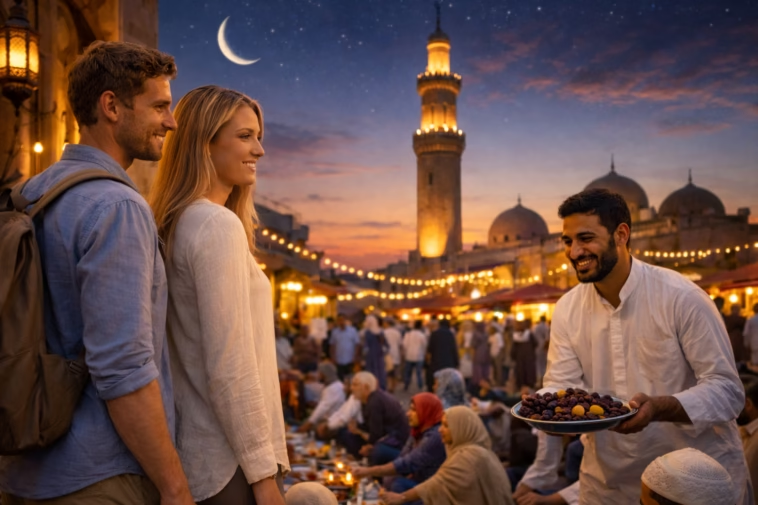
The guide emphasizes that the rhythm of life is profoundly changed during Ramadan. The hours of shops, administrations and tourist sites are often adapted to allow the breaking of the fast, iftar, at sunset. Activity slows down during the day, then intensifies in the evening. Night markets, cafes and restaurants then become major gathering places.
Lonely Planet also indicates that air transport continues to operate normally, even if some companies are adapting on-board service, in particular the distribution of meals. Air traffic increases significantly as Eid al-Fitr approaches, the holiday which marks the end of Ramadan.
Respect and cultural immersion
The site recommends that travelers adopt a respectful attitude. It is advisable to wear modest clothing, covering shoulders and knees, to avoid public displays of affection and to exercise discretion during fasting hours. Refraining from eating or drinking in front of people who are fasting is considered a sign of respect. Lonely Planet finally highlights that Ramadan offers a unique opportunity to discover the community dimension of Muslim societies. Meals to break the fast are often shared in public spaces and open to visitors. In several countries, travelers are spontaneously invited to join meals, illustrating the spirit of generosity and hospitality that characterizes this sacred month.
The guide concludes that traveling during Ramadan involves accepting a different rhythm, but allows access to an authentic cultural experience, as close as possible to local traditions.
