
Ukraine wants to strengthen its presence in halal markets
- Understanding the Ukrainian strategy for the halal market.
- Discover the importance of halal certification for export.
- Exploring economic opportunities in Southeast Asia.
While in France, halal continues to spark endless debate, often presented as an ideological marker or even assimilated to a form of Islamism, the perception is very different elsewhere in Europe and around the world. In many countries, halal is seen above all as a commercial standard, a tool for access to international markets and a quality label, disconnected from identity controversies. The Ukrainian example offers a telling illustration.
Ukraine is continuing its efforts to diversify its commercial outlets and strengthen its agri-food sector. Among the current priorities is the development of exports of halal products, a growing market on a global scale. Ukrainian authorities are working to expand halal certification accreditations to allow domestic producers to access new countries, particularly in Southeast Asia. This strategy was presented by Serhiy Tkachukresponsible for the State Service for Food Safety and Consumer Protectionduring a meeting with representatives of organizations specializing in halal certification. This public institution is responsible for ensuring food safety and consumer protection in Ukraine. It also supervises quality standards, official certifications and export conditions for agri-food products.
In many regions of the world, halal certification is now essential for marketing food products. This is particularly the case in the Middle East, Africa and much of Asia. Without this certificate, access to these markets is impossible, regardless of the quality or competitiveness of the products offered.
Halal certification, a key issue for export
The halal certificate certifies that the products respect Islamic rules and traditions at all stages of their manufacturing. This concerns the selection of ingredients as well as the slaughter methods, the processing processes and even the storage and transport conditions. It can be issued by an official authority of the importing country or by certification bodies accredited abroad.
Ukrainian producers already have certain possibilities to obtain halal certification and export to several countries where the standards of this label are applied. However, these opportunities remain limited. The authorities now wish to broaden this recognition in order to remove administrative obstacles and open up new opportunities.
Southeast Asia in the viewfinder
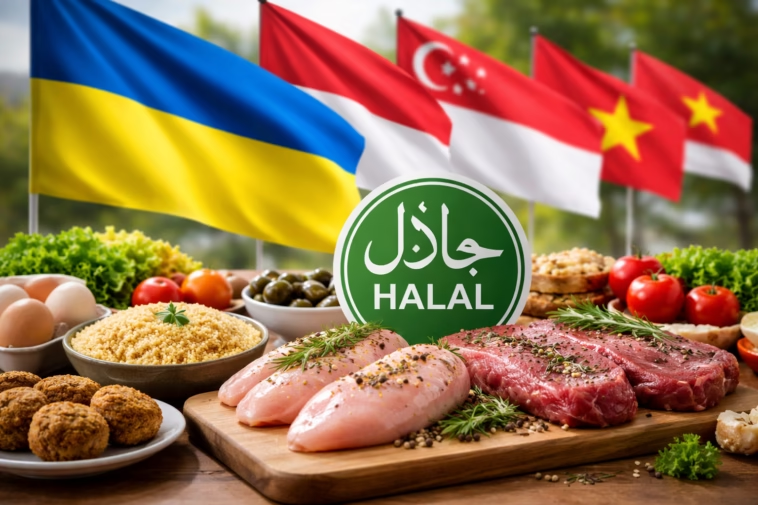
According to Serhiy Tkachuk, Ukraine intends to expand the geography of its halal exports and obtain new internationally recognized accreditations. Targeted markets include Singapore, Indonesia And Vietnam. Indonesia, home to the world’s largest Muslim population, has strict rules for halal certification. Singapore, a major regional trading hub, places particular emphasis on compliance with international standards. Vietnam, although predominantly non-Muslim, is also increasingly interested in halal standards, particularly with a view to exporting.
Beyond its religious dimension, halal is today widely perceived as a label of quality, traceability and health safety. For Ukraine, investing in this market represents a strategic opportunity for economic diversification and sustainable integration into international trade.
