
United Kingdom: a memorial for Muslim soldiers, promise or programmed oblivion?
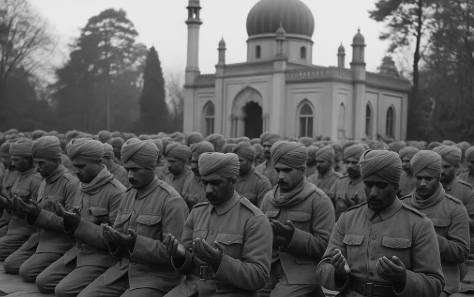
The memorial project in tribute to the Muslim soldiers of the two world wars remains bogged down. Announced in 2024 by the former chancellor of the chessboard Jeremy Hunt, then Minister of Finance of the Conservative Government, with the promise of public funding of a million pounds, he had to honor the millions of Muslims who fought and sometimes left their lives for Great Britain and his allies.
More than a year later, nothing has moved. The Muslim War Memorial Trust is still awaiting a clear commitment to the Labor government. For the moment, only vague words and an extended administrative process: “Silence reigns”, regrets one of its managers. The monument, planned at the National Memorial Arboretum, would however be of a considerable symbolic significance. For relatives of veterans like Shama Husain, it is a moral imperative: “In these troubled times, it would be a reminder that Muslims gave their best for this country. »»
If the project struggles to move forward, it is also because it raises a sensitive question: that of the recognition of the role of colonial troops in the wars led by Great Britain. Behind the administrative slowness hides the political fear of opening a broader debate on the legacy of the Empire and the colonial memory, a subject still largely avoided in the United Kingdom.
The endless expectation is not just a bureaucracy case. It illustrates a deeper discomfort: the difficulty of the United Kingdom in face its colonial history and to recognize the place of minorities in its national story. To delay this memorial is to maintain in the shadow the memory of soldiers who have fought for a country which is struggling today to do them justice. In a climate where British Muslims often feel stigmatized, this monument would be much more than a stele: it would be a political gesture, an act of recognition and a tense bridge between memory, identity and national cohesion.
