
United Kingdom: wave of attacks against mosques in the wake of a nationalist campaign
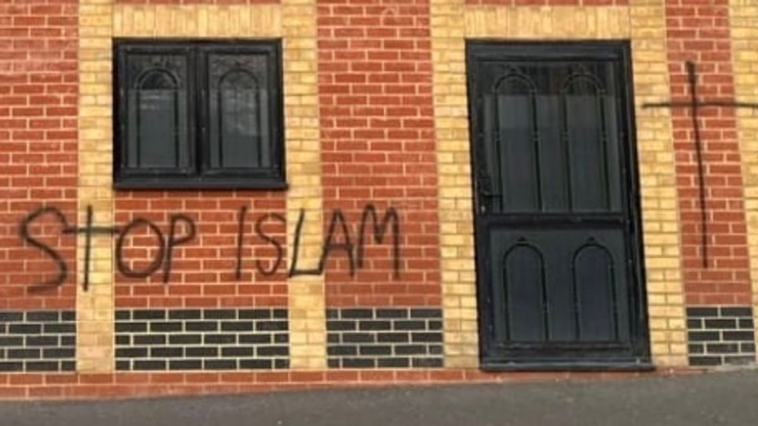
In the United Kingdom, the Muslim community has a wave of attacks and vandalism, while mosques are vandalized as part of a campaign to promote the English flag. A campaign calling for the country in the colors of England, baptized “Operation Raise The Colors”, arouses tensions. Carried by former members of groups known for their Islamophobic positions, she coincides with an increase in anti-immigrant demonstrations.
Since its launch, several mosques and businesses held by minorities have been vandalized, tagged from Saint-Georges and hostile slogans. In Portsmouth, a man was arrested after having verbally and physically attacked the faithful out of prayer, in front of children. In several cities, as in Reading or York, the symbols of this patriotic campaign have turned into acts of intimidation. Signage panels and mosques facades have been covered with aggressive flags or graffiti, fueling a feeling of discomfort within minorities. Social networks amplify this phenomenon, becoming both the vector of these nationalist messages and the resonance fund of concerns of targeted communities.
Faced with this rise in tensions, some mosques have chosen a peaceful and symbolic response. In the Wirral, a community has decided to exhibit a Jack union in the center in the center, initially perceived as a provocation, thus affirming their pride in being “British Muslims”. While Prime Minister Keir Starmer has publicly encouraged this patriotic display, many criticize him for his silence in the face of these racist acts and his lack of leadership to appease the climate of fear that settles.
This situation reveals a deep fracture around national symbols and their reappropriation. On the one hand, a radical fringe instrumentalizes the flag as a xenophobic standard, deliberately aimed at excluding and intimidating the minorities perceived as “non-British”. On the other hand, the reaction of certain mosques, which choose to return the symbol to assert their belonging to the nation, illustrates a strategy of peaceful resistance and assertive integration. The ambiguity of the government, between the encouragement of patriotism and lack of firm condemnation of the excesses, lets persist a dangerous vagueness which implicitly legitimizes these behaviors and risks encyster tensions.
