
“The halal boom: a market that could exceed $6 trillion by 2034
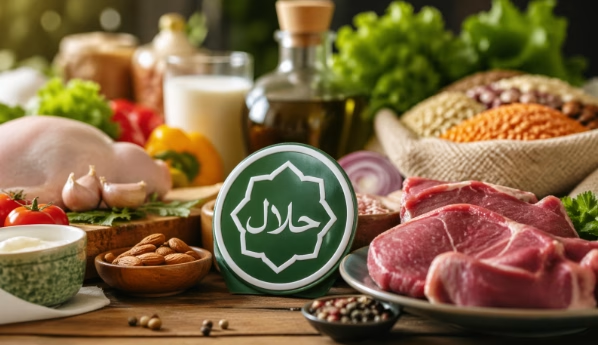
The global halal food market has emerged as one of the most dynamic segments of the food industry. According to a report released in April 2026 by Research and Markets, a Dublin-based international company specializing in market research and business intelligence, this market is expected to grow from $2.95 trillion in 2025 to $6.32 trillion by 2034, corresponding to an annual growth rate of 8.56% over the period 2026–2034.
Strongly expanding global demand
The market growth is primarily fueled by the increasing Muslim population globally, particularly in countries like Indonesia, as well as strong adherence to religious dietary norms. At the same time, the development of multiculturalism and globalization favors a wider diffusion of halal products in international markets.
Halal products no longer only meet a religious requirement: they also appeal to a wider clientele seeking transparency, quality and ethical production. Non-Muslim consumers, particularly Millennials (born between approximately 1980 and the mid-1990s) and Generation Z (born from the late 1990s to the 2010s), associate these products with high standards of hygiene and traceability and favor brands aligned with their values.
Certification, digitalization and new circuits
Halal certification constitutes a key element of market development, strengthening consumer confidence. In many Muslim-majority countries, governments and standards bodies have put in place strict regulatory frameworks, helping to harmonize standards and facilitate international trade.
The rapid development of e-commerce also plays a major role in the market expansion. This development facilitates access to certified products, including in non-Muslim regions. At the same time, fast food chains and distributors are expanding their halal product ranges to meet growing demand.
A changing global market
The Asia-Pacific region largely dominates the market, accounting for over 48.5% share in 2025, thanks to its large Muslim population and sustained demand. However, markets like the United States are gaining importance, driven by cultural diversity and growing interest in products perceived as more ethical. Beyond its religious dimension, the halal market is now part of global trends such as responsible consumption, clean label and the search for sustainable products. It encompasses a wide range of products: meat, dairy products, beverages, processed foods and ready-to-eat meals.
According to another study published in February 2026, the market was valued at $2,670 billion in 2024 and could reach $5,960 billion by 2033, confirming sustained growth dynamics.
