Omar Khaliel: Islamic products for everyone
The head of the Riba Free Foundation draws lessons from British mistakes for French Islamic finance.
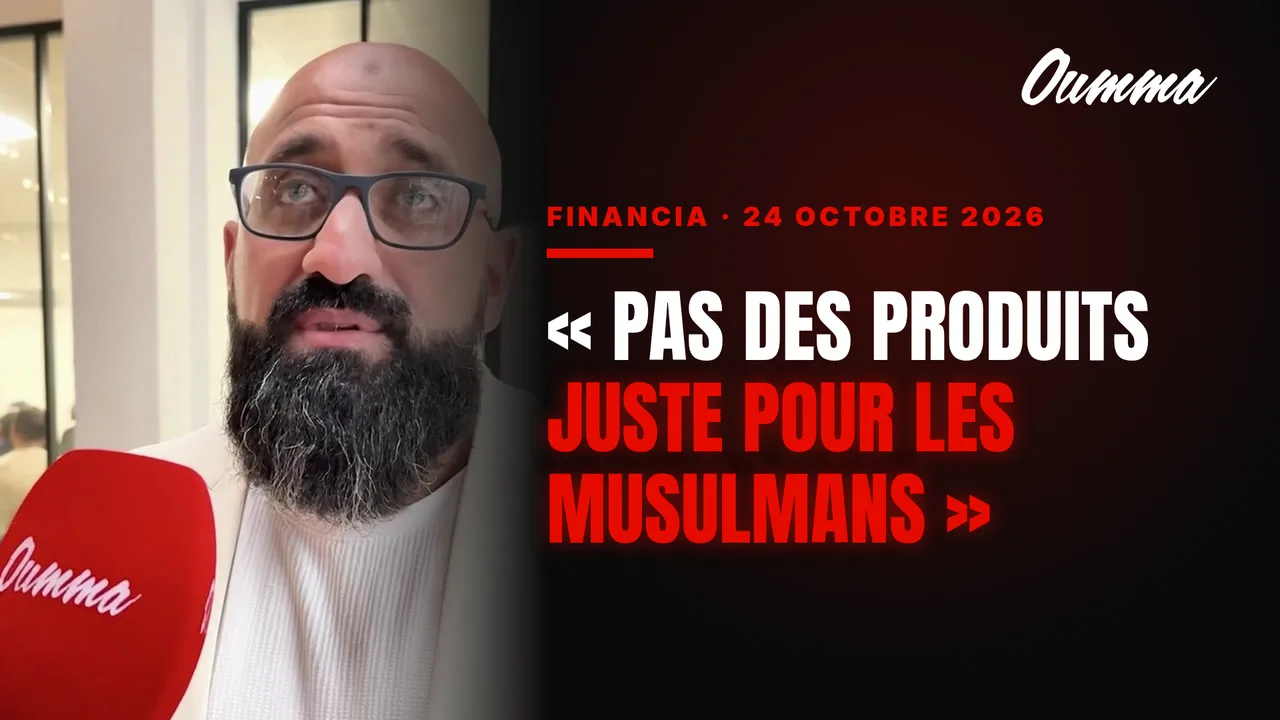
The UK has been practicing Islamic finance for decades. He has had successes, but also mistakes. Guest of honor at the Financia Business School graduation ceremony in Paris on October 24, 2026, Omar Khaliel, general director of the Riba Free Foundation in London, drew advice for France: do not design products “just for Muslims”. His remarks, spoken in English, are translated by the editorial staff.
“You will learn from our mistakes much faster”
Omar Khaliel starts from an entrepreneurial observation. In a new market, the first to arrive pays for the others. “It always takes that first, that first entrant into the market, that first player who makes all these mistakes to learn how to navigate the regulations, to educate the grassroots communities, to work with stakeholders, to engage with industry players. »
The British played this role in Europe. France can therefore, according to him, skip steps: “In France, I really believe it, by looking at what we have done over the last twenty, thirty years, what we have done well and what we have done less well, you will learn from our mistakes much more quickly and you will be able to move forward much more quickly. »
He adds a demographic argument: “you have twice as much population here”. The figure does not hold for the total population. According to INSEE, France had 69.1 million inhabitants on January 1, 2026. According to the British Office of National Statistics (ONS), the United Kingdom had 69.3 million in mid-2024. The two countries are on equal terms. If he was thinking of Muslims, no official statistics allow us to speak of the double: France does not record religions, and only has sample surveys.
The first mistake: not knowing how to explain
Omar Khaliel recognizes a British failure. In the full interview, he explains that the UK has probably failed to communicate the value of Islamic finance to the general public. His foundation is now working with the government and Parliament to make legislation more inclusive, “for all communities”.
The investigations prove him right. In May 2024, the Islamic bank Gatehouse had 1,002 Muslims and 1,004 non-Muslims living in the United Kingdom surveyed by the Censuswide institute. Result: 30% of British people think that Islamic finance is reserved for Muslims. This is the case for 35% of non-Muslims, and even 26% of Muslims. Nearly one in five non-Muslims (19%) say they find these products difficult to understand.
The rating agency Fitch takes up these obstacles in its analysis of the British market: lack of understanding, limited supply, higher fees than those of traditional products, and the perception that Islamic finance is only aimed at Muslims. It adds to this the limited size of the Muslim population. Despite decades of efforts, Islamic banks account for 0.1% of the country’s banking assets.
“Just for Muslims”: the trap
Hence his warning. “I understand that the French community is impatiently awaiting these offers. But I will say one thing: one of the fundamental mistakes that many people make is that they created these products just for Muslims. I strongly advise against it. »
The reasoning is commercial as well as moral. A product reserved for a community deprives itself of the majority of the market. It also reinforces the widespread idea that Islamic finance is a closed religious affair. The Gatehouse survey, however, shows an opening: 30% of non-Muslims surveyed would consider switching to an Islamic finance establishment.
Non-Muslim customers already there
The example of Al Rayan Bank, Britain’s oldest Islamic retail bank, shows what happens when the offering is for everyone. According to the specialist media Salaam Gateway, 55% of the bank’s new customers since 2014 were not Muslims. In 2018, 90% of the holders of its term deposits were not either. The media links this influx to savings rates among the best on the market, and to the change of name of the establishment in 2014: until then it was called Islamic Bank of Britain.
These customers do not come for Sharia law. They come for performance, service, sometimes ethics. Umma has echoed this trend, whether it is the interest of non-Muslims in Islamic finance or the one in two Britons ready to turn to it.
“Create universal products”
Omar Khaliel’s advice comes in one sentence: “Create universal products that solve societal problems and are commercially viable for everyone.” Then people will understand the true value of Islamic finance. »
His own association enforces the rule. According to the register of the Charity Commission, the UK’s charity regulator, the Riba Free Foundation helps people of all faiths, or no religion, live interest and usury free. Its statutes also target people in difficulty due to interest-laden debts. Over-indebtedness is not a problem reserved for Muslims.
Three conditions follow from his sentence. A social problem to be solved: access to housing, over-indebtedness, young people’s savings. Commercial viability: the product must hold up without subsidies or activism. And openness to all: compliance with Sharia law becomes a guarantee of method, not an admission criterion.
“The real economy coincides with the moral economy”
Omar Khaliel’s last word is a reminder of principle: “Islamic finance ensures that the real economy coincides with the moral economy. » In Islamic finance, money does not earn money by itself. It must involve a good or an activity: a building purchased then resold, equipment rented, a business whose results are shared.
The British State provided an illustration of this. Its March 2021 sukuk, £500 million, was backed by rents from state-owned offices, according to the UK government. Investors did not receive interest but a share of these rents.
The principle does not provide immunity against abuses. Umma showed that British “halal” funds invest in companies linked to the genocide in Gaza: technical compliance does not guarantee morality. Conversely, Islamic finance can join ecological battles that speak to everyone.
The Riba Free Foundation is young: registered in January 2024, it declared 12,713 pounds of revenue for its first financial year, ending at the end of 2024. Find the entire report and the other speakers in our article Leading with its values: Islamic finance at the service of business leaders.
