
According to a BBC survey, twenty years after July 7, a generation of British Muslims remains deeply marked
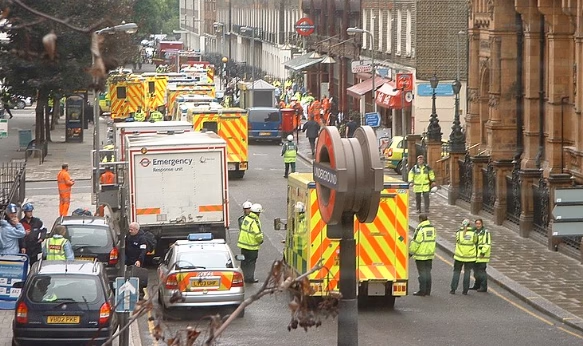
In an article published on the BBC website, several voices from the British Muslim community return to the sustainable impact of the attacks of July 7, 2005, which had left 52 dead in London transport. Twenty years later, the consequences remain deep, in particular in Leeds, a city of three of the four suicide bomber. “It was a total shock. They were born here, spoke like us, dressed as us, ”said Fahad Khan, a social worker in Beeston, in the columns of the BBC. Aged 18 at the time of the events, he has been committed since young Muslims faced with increased stigma since the attacks.
The article underlines how these events permanently modified the perception of British Muslims, by increasingly associating the youth from immigration with suspicions of radicalization. In response, the government launched the program in 2006 Preventsupposed to fight against extremism. But this strategy, denounced by several organizations as ineffective and discriminatory, remains controversial. Yahya Birt, a university and community militant, entrusts the BBC that the occasion for a real partnership between the State and the Muslim communities was missed: “We wanted policies anchored in our realities. The state has chosen a posture of confrontation. »»
Two decades later, while the attacks are commemorated, the shadow of 7/7 continues to weigh over an entire generation. For Fahad Khan, the essential is clear: “We must continue to support our young people. Because too long, we have been looked at like suspects, not as citizens. Even today, many British Muslims say they live with the indirect consequences of these attacks: facies controls, stigmatizing political discourse and feeling of exclusion. For many, the memory of July 7, 2005 is not just a date, but a silent turning point in their report to British society.
