Islamic finance: offers exist, according to Merbouh
The director of Financia’s Islamic finance department takes stock: savings are progressing, SME financing remains to be industrialized.
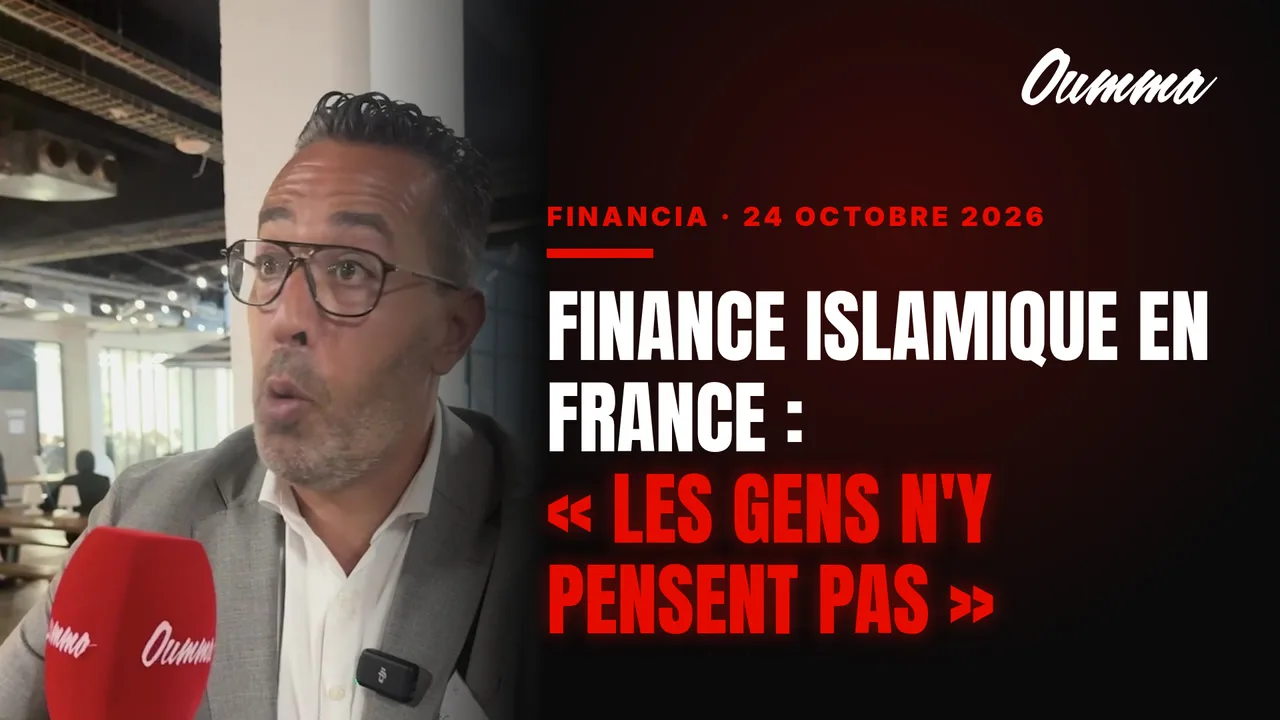
Islamic finance solutions exist in France, more numerous than one might think, but the public is not aware of them. This is the assessment that Kader Merbouh, director of the Islamic finance department of the Financia Business School, draws from the conference “Leading with your values, ethical journey & Islamic finance”, organized on October 24, 2026 in the school, in Paris, by students of the 8th promotion of the Certificate of Islamic Finance. At Oumma’s microphone, he distinguishes what is moving forward, savings, from what is still blocking: the financing of SMEs.
“We have not yet managed to industrialize financing solutions for SMEs”
Kader Merbouh weighs his words. “We have to be positive not out of optimism, but there are starting to be more tailor-made, “tailor-made” solutions,” he says about business financing. The question “begins to take shape”. But he immediately sets the limit: “We have not yet managed to industrialize financing solutions for SMEs. »
The difference between tailor-made and industrial can be seen in the figures of classic finance. According to the Banque de France, outstanding loans granted to SMEs reached 548.7 billion euros at the end of September 2026, up 1.7% year-on-year, for an average cost of new loans of 3.84%. These loans go through the usual channels of banks. An SME that wants to finance itself without interest cannot find an equivalent: each operation is set up on a case-by-case basis, with a suitable contract.
There is no shortage of legal tools. Since 2009 and 2010, the tax administration has described in the Official Bulletin of Public Finances (BOFiP) the treatment of murabaha (purchase-resale with margin known in advance), sukuk, ijara (rental with purchase option) and istisna (financing of a property to be built). SMEs have used it. Oumma recounted in 2012 how a French company had raised nearly 500,000 euros in sukuk to open a restaurant in Alfortville. This type of operation, however, remained rare.
Savings, where the offer is expanding
The situation changes for savings. “On the other hand, for savings, there are starting to be more and more,” notes Kader Merbouh. That day, wealth managers and companies that design savings products came to present their solutions.
This offer is based on a framework established in July 2007 by the Financial Markets Authority (AMF), which specified the conditions under which a fund can declare itself compliant with Islamic law: objective and verifiable criteria. Life insurance contracts followed in 2013, as Oumma reported during the launch of the first “Sharia compatible” contracts. The stakes are high. According to the Cercle de l’Épargne, which uses figures from France Assureurs, life insurance totaled 2,107 billion euros in outstandings at the end of 2025, more than 30% of the financial savings of French households.
London, a less cruel comparison than it seems
The conference welcomed guests from London, including Omar Khaliel, from the Riba Free Foundation. Kader Merbouh reports their judgment: “Our London friends tell us that we absolutely have nothing to be ashamed of the offer between England and France. »
On the offer of savings products, the rapprochement is defended. On an institutional level, the gap remains clear. In June 2014, the United Kingdom was the first country outside the Muslim world to issue a sovereign sukuk, for 200 million pounds, according to the British government. It issued a second in March 2021, for 500 million pounds, maturing on July 22, 2026. The country also has five Islamic banks, according to Omar Khaliel. Nothing of the sort in France, where no entirely Islamic bank is approved. The comparison also has its limits on both sides: in its report on debt management 2026-2027, the British Treasury indicates that it is not planning a new sukuk for the moment.
“The problem is that people don’t think about it”
For Kader Merbouh, the main obstacle is no longer the absence of products. “There are offers, more and more offers. The problem is that people don’t think about it, and some don’t even believe in it, quite simply. »
This doubt has a history. In November 2007, Revue Banque described Islamic finance as practically non-existent in France, limited to a few real estate financings arranged for funds from the Middle East. The British experience shows that trust is built. Oumma reported at the beginning of November that one in two Britons say they are ready to turn to Islamic finance, according to a study by Gatehouse Bank, provided that it offers services comparable to those of traditional banks. The public follows when the offer is visible and credible.
An ecosystem of professionals in France
Hence the objective of the day. “The demonstration of this conference is to show that at all levels, transmission, savings, financing, there are solutions,” explains Kader Merbouh. And professions to implement them: “accounting firms, notaries, lawyers, asset management firms”. Several of them also spoke at the conference, from the accountant to the notary.
These professions are regulated, which protects the client. A wealth management advisor who recommends investments must have the status of financial investment advisor (CIF), be registered with ORIAS and belong to an association approved by the AMF. According to the AMF, France had 7,013 CIF at the end of 2024.
The Financia Business School contributes to this. Kader Merbouh told Oumma in 2024 that he co-founded an association which in 2007 created the first training program in Islamic finance in France. The school launched an MBA in Islamic finance in 2021, and its department organizes an annual gala for players in Islamic finance, the second edition of which was held on January 24, 2026 in Paris. “We have more and more segments that support this ecosystem in France,” concludes Kader Merbouh.
Find the full report and the other speakers in our article: Leading with your values: Islamic finance at the service of business leaders.
