London 1926: first call to prayer in Southfields
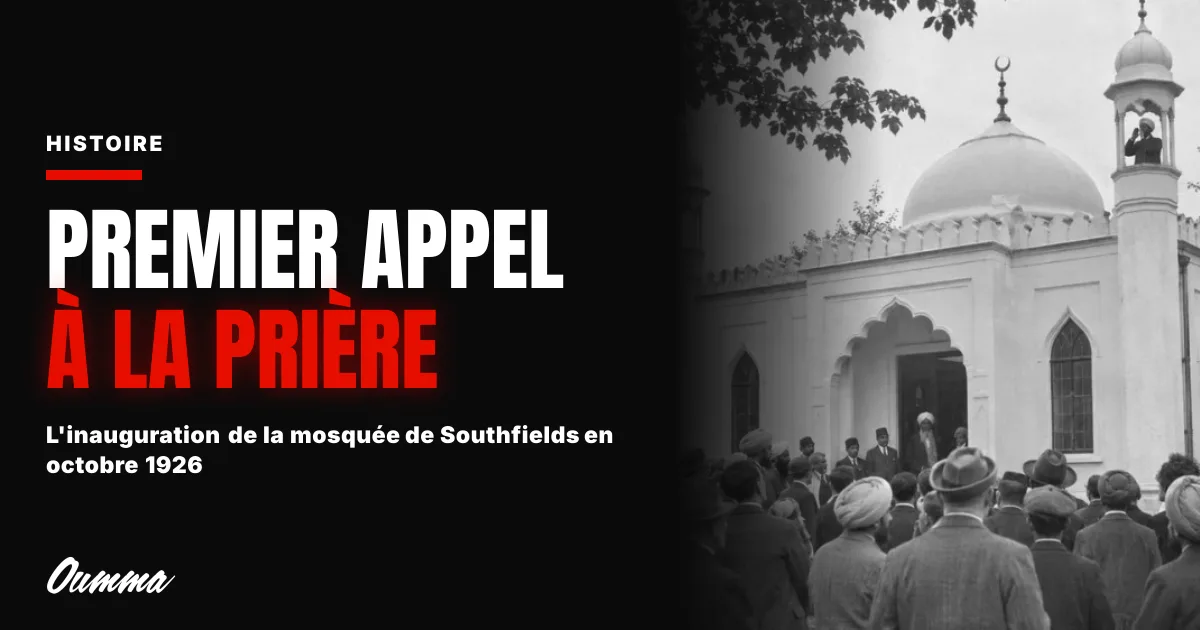
This Sunday in October 1926, worshipers from all over Britain and Londoners of several faiths flocked to Southfields, where the Ahmadi community opened its mosque. Emir Faisal, viceroy of Mecca, was to open the doors, but his withdrawal leaves this honor to a representative of India. The newspapers wonder about the prince’s absence and recount an unprecedented moment for the British capital, one where a crowd falls silent to listen to the call to prayer.
At the entrance to the mosque, on Melrose Road, a notice signed by Imam Abdul Rahim Dard, who leads the prayer, announces the change of program. The day before, he learned that Faisal would not come. According to the South Western Starthe prince’s father, Ibn Saud, then king of Hejaz and Nejd, in the Arabian Peninsula, forbade his son from participating. The emir sent emissaries to present his regrets to the community.
In the prince’s absence, an Indian delegate receives the key
In front of the guests, the imam reads a letter from the head of Hejaz foreign affairs confirming Faisal’s absence. Why this last minute withdrawal? According to the British daily The Morning Postthe imam himself says he does not know the reason. He raises the possibility that the king was misinformed about the Ahmadi community, some of whose beliefs are contested by other Muslims. The accounts of the time do not make it possible to establish what motivated the king’s decision.
It is therefore to Sheikh Abdul Qadir, former minister of Punjab and member of the Indian delegation to the League of Nations, the international organization which preceded the UN, that the imam gives a silver key. The delegate opens the mosque in the name of God. The moment the doors part, reports the South Western Starthe faithful exclaim three times “Allahu akbar”, “God is the greatest”.
The public goes well beyond the ranks of the Ahmadi community. Visitors include the Mayor of Wandsworth, the borough where Southfields is located, British MPs, Anglican clergy and representatives from several consulates. Muslims who do not belong to the Ahmadi movement also speak out. They say they hope that all Muslims in London will be able to meet in this mosque.
At 4:15 p.m., the crowd falls silent and the call goes up
Outside, part of the public follows the ceremony from around the mosque. The white building, topped with a dome and flanked by four small towers, can accommodate around 200 worshippers. Above the door, an inscription in Arabic proclaims faith in one God and recognizes Muhammad as his messenger. Just below, a few words in Persian present the mosque as a home of peace. At 4:15 p.m., the conversations cease. From the top of one of the towers, GF Malik, the muezzin responsible for calling the faithful to prayer, makes his voice heard. British Muslims join other worshippers. After the ablutions, the ritual washing which precedes the prayer, they enter the room covered with a blue carpet. Imam Abdul Rahim Dard directs the first office there.
In the days that followed, the press raised a very concrete question. On October 7, 1926, the review The Near East and India believes, given the crowds, that the new mosque will be too small to meet the needs of London’s Muslims. Sheikh Abdul Qadir took advantage of the inauguration to address a request to the British government: that it in turn support the construction of a large mosque in the capital.
Subscribe to the Oumma letter: our articles, our analyzes and our new programs arrive directly in your mailbox.
Free. One-click unsubscribe. Everything you need to know about Umma’s letter
