Palestine: Francesca Albanese supports youth
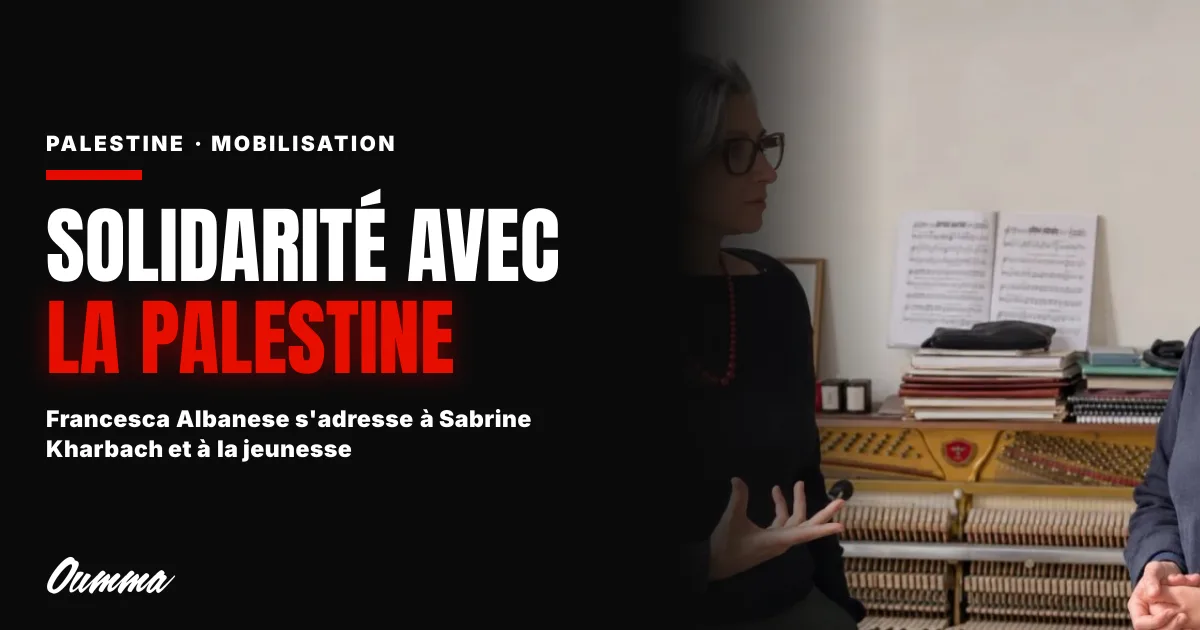
“We find ourselves in the street. » It is with these words that Sabrine Kharbach, spokesperson for the Student Union, concludes her exchange with Francesca Albanese, UN special rapporteur on the human rights situation in the occupied Palestinian territories. In three minutes, the two women connect solidarity with the Palestinians to issues that directly affect young people in France, from the right to demonstrate to the resources devoted to education. Sabrine Kharbach opens the discussion by mentioning the Palestinian flags that young people brandish in their processions. For the trade unionist, the Palestinian question does not stop at the gates of high schools. She uses the word “compass” to express the place that this cause occupies in the mobilizations in which she participates. Young people, she assures, will continue to carry these flags and shout “Tahia Palestine”, “Long live Palestine”, in the streets. Then she thanks Francesca Albanese for her support.
The UN rapporteur responds by evoking two feelings that inhabit her, hope and worry. She says she follows these mobilizations with interest and welcomes the way in which young people connect the Palestinians’ fight for self-determination to their own desire to decide their future. Her tone changes when she talks about police interventions in several European countries. What scares her, she says, is seeing members of the police hitting demonstrators, sometimes minors. The exchange then shifts towards the responsibility of governments. Faced with what she describes as genocide in Gaza, Francesca Albanese asks why states continue to provide military and financial support to Israel. Sabrine Kharbach brings the discussion back to France. When young people ask for resources, she observes, they are told that there is not enough money. How can we hear this argument, asks the spokesperson for the Student Union, when the public authorities find funds for armaments?
Francesca Albanese recognizes in this intervention a concern that crosses several countries. She discusses the needs of health, justice and education, while military spending continues to increase. She also draws attention to the environmental destruction linked to militarism. In his eyes, the fact that movements engaged in such different areas are beginning to come together constitutes precisely a reason for hope.
In the last seconds, the rapporteur returns to what citizens have the right to expect from their leaders. It evokes respect for constitutional law and international law, integrity in the exercise of power and the need to act in the interest of the people. She wishes courage to Sabrine Kharbach, who then arranges to meet her in the street. Their conversation thus outlines the contours of a commitment shared between two generations: defending the rights of the Palestinians, public freedoms and the right of young people to influence the choices that affect their future.
Subscribe to the Oumma letter: our articles, our analyzes and our new programs arrive directly in your mailbox.
Free. One-click unsubscribe. Everything you need to know about Umma’s letter
