
Sufia Kamal, the poet who broke the taboo of photography in Bangladesh
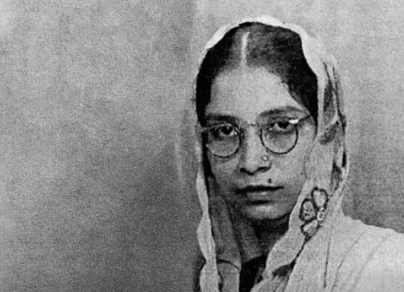
When she died on November 20, 1999, Sufia Kamal was given a state funeral — the first woman in Bangladesh to receive such an honor. However, long before becoming a major figure in Bengali culture and the women’s rights movement, she had already dared to make a bold gesture that would mark history. At the end of the 1920s, when photographing Muslim women was still inconceivable, the young Bangladeshi poet, then aged 18, decided to defy a deeply rooted social prohibition. She went to the renowned C. Guha studio in Kolkata to have a portrait created for publication in the special “women” issue of the literary review. Saogatin September 1929. At that time, even men were reluctant to allow themselves to be photographed, and women living in purdah remained invisible, even in the extended family space. That a young Muslim woman posed in front of a lens was therefore a scandal that had been announced.
Encouraged by Mohammad Nasiruddin, progressive publisher and pioneer of female emancipation, Sufia Kamal accepts despite the reluctance of those around her and the fear of social reactions. The photographer Charu Guha, perfectly aware of the taboo he was about to shake, produced a series of careful portraits – and even refused any remuneration. When the number of Saogat appears, it is a real event: conservatives are indignant, critics are unleashed, but readers rush to discover these never-before-seen images of Muslim women.
Sufia Kamal will not suffer the consequences of this publication. Paradoxically, it is his poem Birambitawrongly interpreted as an autobiographical confession, which will cause tension within his family. The portrait, on the other hand, will remain as a founding act: that of a young woman who, by defying a taboo, opened a breach towards an assumed feminine presence in the cultural life of Bengal.
Because Sufia Kamal’s gesture goes far beyond just taking a photo. In a context where the female body was erased from public space, agreeing to be photographed amounted to asserting a social and symbolic existence. This transgression reveals the extent to which visual modernity – photography, portraiture, the illustrated press – played a determining role in the process of emancipation of women on the subcontinent. By breaking the ban, Sufia Kamal does not just make herself visible: she opens the way for an entire generation of women, inviting them to reclaim their image and write their presence in history.
