
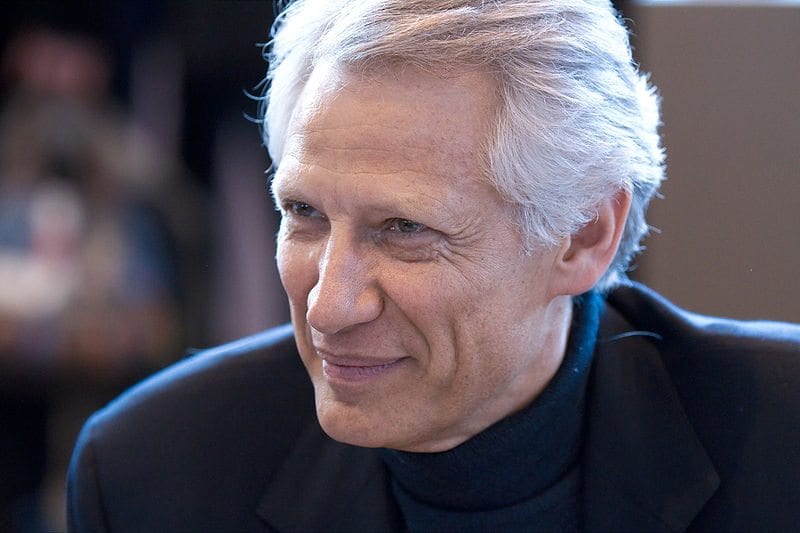
“The lesson of Iraq”: Dominique de Villepin reframes a plateau acquired by the American story
- Analysis of the consequences of Western interventions.
- Reflection on the rise of terrorism and regional chaos.
- Call for historical and strategic awareness.
In a media landscape often aligned with dominant narratives coming from Washington, some voices continue to resist, question and recall the lessons of history. Guest on LCI, Dominique de Villepin distinguished himself by speaking with rare clarity, contrasting with the conventional tone of journalism too often adopted from the American reading grid. Villepin does not speak in a vacuum. He summons historical realities that many prefer to forget: “Is the Syrian, Iraqi, Libyan chaos which led to the Sahel war, which led, as far as Iraq is concerned, to the birth of the Islamic State, the terrorism of which we all suffered the consequences…”
In a few words, it recalls the tragic sequence of Western interventions. Far from the promises of stability and democracy, these wars have given rise to chaos, terrorism and lasting regional disorder. A truth that the dominant media discourse tends to minimize, or even erase. Faced with the prospect of escalation, particularly against Iran, Villepin warns: “Won’t this create an extremely powerful revenge syndrome in the world? »Dominique de Villepin reframes a plateau acquired by the American story
This question is not trivial. She points to a well-known mechanism: that of collective humiliations which fuel cycles of violence. Destroying a country, its infrastructure, striking its population, does not reduce the threat — it often means preparing it for tomorrow. Villepin insists on a central point: “You think that we will reduce uncertainty. I tell you – and this is the lesson of Iraq…”. A lesson that he himself embodied in 2003, when, on behalf of France, he opposed American intervention at the UN. A position which, with hindsight, appears to be a demonstration of strategic lucidity.
Iran: Dominique de Villepin teaches Darius Rochebin a lesson pic.twitter.com/RVObFfj2Yi
— Oumma.com (@oumma) April 3, 2026
It also evokes two historical figures: Jacques Chirac and Charles de Gaulle. Both had, in their time, warned against American military adventures and their global consequences. Faced with journalist Darius Rochebin, Villepin does not just analyze: he directly challenges the very framework of the debate. “America is leading us into a world that is more threatening, more dangerous, more unstable…” And above all: “There is no way (…) that we can at any time rejoice in what is happening. We do not live in a safer world. »
This sentence resonates as a scathing disavowal of those who, on certain platforms, present these interventions as strategic necessities or future victories. In a context where part of journalism relays, sometimes without critical distance, the American and Israeli narrative—that of a war that would stabilize, of a power that would protect—the words of Dominique de Villepin appear as a breath of lucidity.
It reminds us of an essential thing: recent history is there to judge. And it condemns, without ambiguity, warlike illusions. At a time when international tensions are escalating, this insight is not only valuable — it is essential.
