What a Muslim can finance in France
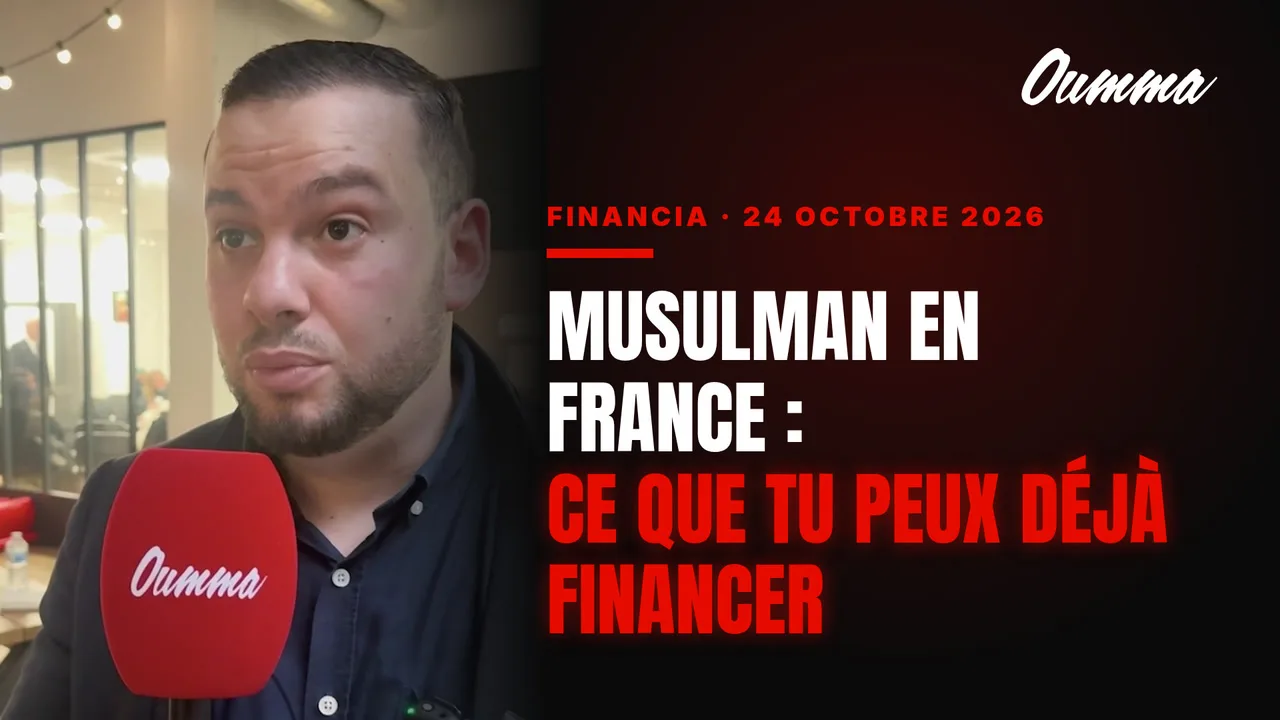
Buying your home, investing in the stock market, preparing for retirement without giving up your principles: is this possible in France? Yes, answers Baghdad Chijii, co-founder of the firm Abtal, a multi-family office which supports high-level athletes and business leaders in wealth management consistent with Muslim ethics. Oumma met him on October 24, 2026 at the Financia Business School, in Paris, during the conference “Leading with your values, ethical path & Islamic finance”, organized by students of the 8th promotion of the Certificate of Islamic Finance. Here, tool by tool, is what his list covers and how these solutions fit into French law.
“A few years ago, there weren’t really a lot of solutions”
Baghdad Chijii starts from an observation. “A few years ago, there weren’t really a lot of solutions. But for, come on, ten years, today, a French Muslim can absolutely finance the acquisition of his main residence, make a rental investment, acquire business premises. »
The legal framework is a little older than these offers. The tax administration described the treatment of the main Islamic finance contracts in two instructions, dated February 25, 2009 and August 24, 2010, included since 2012 in the Official Bulletin of Public Finances (BOFiP). It then took several years for players to build products accessible to individuals.
Housing and premises: buy without borrowing at interest
To finance real estate, the most common contract is the murabaha. The BOFiP describes it as follows: the client asks a financier to buy a good, which the financier immediately sells to him at a price payable in installments, higher than the purchase price. The difference consists of income, which pays for the payment delay, and a commission. The customer knows from the start the total price he will pay.
It is therefore not free financing. The French tax authorities are not mistaken: according to the BOFiP, the financier’s income pays for a deferred payment and it is assimilated, from a tax point of view, to interest. The difference, for the Muslim buyer, is due to the nature of the contract: a sale with a margin, and not a paid loan of money. A second formula, the ijara, is a rental accompanied by a promise of sale: the BOFiP brings it closer, depending on the case, to leasing or rental with an option to purchase.
Oumma has devoted several programs to these arrangements, including Financing your home with Islamic credit?, with a Parisian notary, and a review of real estate financing contracts. As with any purchase, the deed is passed to the notary, and the contract must respect French banking, tax and real estate law.
Stock market, funds, real estate: all asset classes
Investment does not stop at housing. A French Muslim can also, according to Baghdad Chijii, “invest in all asset classes: in real estate in France or abroad, on Islamic financial markets, on the stock market, in certain investment funds”.
In the stock market, compliance is based on sorting. The standards of the AAOIFI, the Bahraini body which sets the main standards of the sector, exclude companies active in alcohol, tobacco, pork, gambling, arms or conventional banking. They also exclude companies that are too indebted: according to the Sharia index guide of the Muscat Stock Exchange, which applies these standards, interest-bearing debts must remain below 30% of the average stock market value over twelve months. A fund that declares itself compliant must, in France, make these criteria verifiable: the Financial Markets Authority (AMF) has required this since its July 2007 position on funds claiming to follow Islamic law.
The sector also has its equivalent of bonds, sukuk, backed by real assets. Oumma told in 2012 how a French SME had raised nearly 500,000 euros in sukuk to open a restaurant in Alfortville.
Tax envelopes: “In a French context, it is important”
Baghdad Chijii insists on one point: these investments can be placed in envelopes which “will provide tax advantages”. “In a French context, it’s important,” he emphasizes. Three envelopes dominate, each with its rules, recalled by Service-Public.fr:
- Life insurance. After eight years, the earnings withdrawn benefit each year from a reduction of 4,600 euros for a single person and 9,200 euros for a couple. “Sharia compatible” contracts have existed in France since 2013, as Oumma reported when the first contracts were launched.
- The stock savings plan (PEA). Capped at 150,000 euros in payments, it exempts earnings from income tax after five years, excluding social security contributions. It is reserved for shares of European companies: a compliant fund must respect this rule to enter.
- The retirement savings plan (PER). Payments are deductible from taxable income, within a certain limit, if they are made before age 70. Since January 1, 2026, payments made after age 70 are no longer deductible.
In each case, the envelope is only a container. It is the choice of supports inside that makes the placement compliant or not.
Support the real economy
Last floor of the list: “alternative investments which will directly support our entrepreneurs, and therefore the real economy”. In France, one of the ways is crowdfunding. Since November 10, 2023, only platforms approved by the AMF as crowdfunding service providers (PSFP) can offer to lend to a company or invest in its capital. According to the AMF, 59 platforms were approved at the end of 2024, and they collected 1.46 billion euros that year, down 22% year-on-year.
For a Muslim investor, taking an equity stake, which shares profits and losses, is the form closest to the principles of Islamic finance. The European regime does not cover interest-free loans, which fall under another French status, that of crowdfunding intermediary. These investments remain risky: the AMF points out that the capital invested may not be repaid, in whole or in part, and that the securities may be difficult, or even impossible, to resell.
“His heritage adventure continues”
For a business leader, Baghdad Chijii describes a two-step method. First a diagnosis, to “understand both your personal and professional situation, your needs, your objectives”. Then, “we put in place a long-term heritage strategy”.
The objective is to “build assets as a good father, both efficient from the point of view of its values, efficient from a tax and legal point of view”, capable of “generating a passive asset income”. The idea is not to rely entirely on the company: the heritage built next to it must survive it. “So that if tomorrow the entrepreneurial adventure stops for this business leader, his heritage adventure continues,” he summarizes.
Before entrusting your savings, the rule remains the same for everyone: check that the advisor is registered with the ORIAS, that the management company is approved by the AMF, and read the documentation for each support. Find the full report and the other speakers in our article: Leading with your values: Islamic finance at the service of business leaders.
