
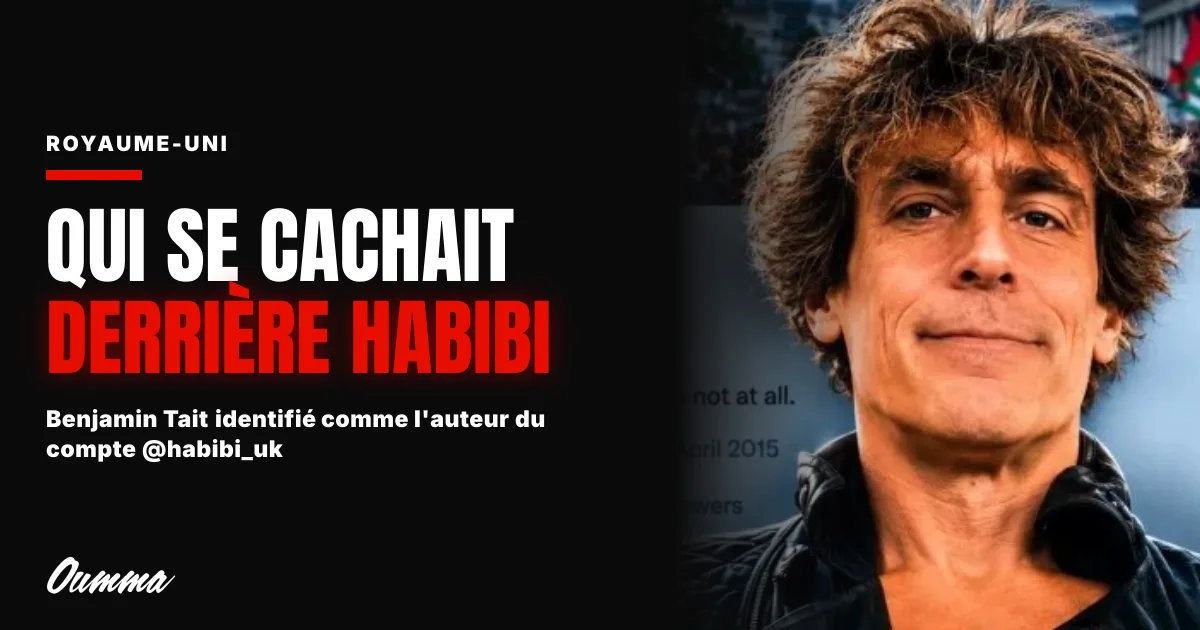
United Kingdom: who was behind the account
According to an investigation by the British newspaper Byline Times, Benjamin Tait, a former American civil servant, wrote for nearly eighteen years under the pseudonym “Habibi”. In the United Kingdom, a former Labor MP relayed his publications on X and a research center cited them in several reports.
In the United Kingdom, the @habibi_uk account regularly accused people who denounced the war waged by Israel in Gaza of racism or anti-Semitism. After six months of investigation, British journalists attributed his approximately 42,000 publications to Benjamin Tait, a British-American businessman who worked for the State Department, the American Department of Foreign Affairs. By retracing the journey of his messages, they show how accusations published under a pseudonym found outlets in the British political debate.
Jeremy Corbyn, former leader of the British Labor Party and supporter of the Palestinian cause, appears in 317 posts by @habibi_uk. The elected officials were far from being the only ones targeted. The account also attacked Stephen Kapos, a Jewish Holocaust survivor who participated in protests in support of the Palestinians. In a message, “Habibi” presented Kapos as Jewish support for these processions.
To measure the extent of this activity, investigators analyzed nearly 300,000 publications, taking into account messages from “Habibi” and those from other accounts. They identified 700 people mentioned at least three times by @habibi_uk. According to their ranking, 363 were the subject of personal attacks, 263 of criticism and 74 were simply quoted.
The pseudonym “Habibi” was already circulating before the account was opened on X. Between 2008 and 2025, its author signed 536 articles on Harry’s Placea political blog where he notably addressed issues related to Muslims, extremism and the Israeli-Palestinian conflict. In April 2015, he opened @habibi_uk on the network then called Twitter, choosing a portrait of Queen Elizabeth I as his profile photo.
Under his own name, Benjamin Tait, 61, was best known as a specialist in energy markets. After working for two years abroad for the American Department of State, he and his wife ran a research company dedicated to this sector for almost thirty years. The Reuters news agency cited him for his analyses.
From anonymous accounts to elected officials and research reports
Investigators identified 57 accounts that contributed to disseminating criticism targeting twelve personalities. Among the most active relayers, another anonymous account, @SubversiveForce, shared or cited “Habibi” 1,151 times. For his part, “Habibi” relayed @SubversiveForce 785 times. These figures show how often each gave visibility to the other’s publications. They are not enough, the journalists point out, to establish that the network obeyed a common direction.
Among the personalities who relayed “Habibi” is Ian Austin, a former Labor MP who became the United Kingdom’s trade envoy to Israel. He shared at least 34 posts from the account. Austin also chaired Mainstream: The Campaign Against Extremisman organization whose management company Benjamin Tait controlled. According to the electoral registers consulted by Byline Timesthis organization spent 134,457 pounds during the 2019 legislative campaign, notably on advertisements directed against Jeremy Corbyn and the Labor Party.
The messages have also acquired another status by becoming references in research work. In 2022, the Henry Jackson Society, a British foreign policy research center, cited @habibi_uk nine times in a report on Hindu-Muslim clashes in Leicester, England. In another report, the center thanked “Habibi” for its expertise. For readers who wanted to know who provided this expertise, the source remained a pseudonym.
On October 28, 2026, journalists sent more than 120 questions to Benjamin Tait and his wife. The account’s activity then increased from 47 publications per day on average to around ten. After the publication of the first part of the investigation, on November 12, journalists noted no new messages. Four days later, when they published the name they associated with the pseudonym “Habibi”, Benjamin Tait had not responded to their questions.
