
Oumma report on Thomas Guénolé’s show, A Boat for Gaza
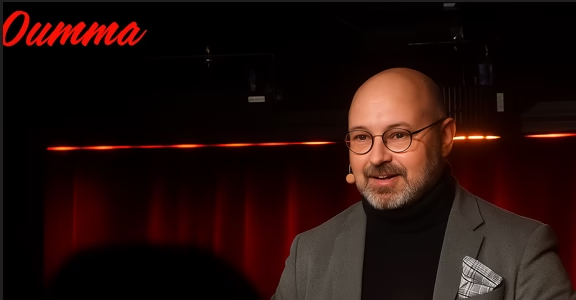
Oumma report on the Thomas Guénolé show, A Boat for Gaza
With A Boat for GazaThomas Guénolé transforms his commitment into real theatrical material. On stage, he recounts the humanitarian expedition he experienced, the violence of the Israeli army, the detention, but also the political lessons learned from this direct confrontation with the colonial apparatus. Between first-person testimony, geopolitical analysis and reflection on the power of global solidarity, his show becomes a political act in itself. Oumma attended this performance where emotion, lucidity and anger combine, to understand how an embodied story can fight against dehumanization and restore meaning to the commitment to Gaza.
Violence, captivity and meeting with Ben Gvir
Thomas Guénolé evokes the violence suffered by the activists as soon as they were intercepted: beatings, humiliations, physical attacks, confinement in a large cage separating men and women “like animals”. It is in this context that he meets Ben Gvir, in his eyes the incarnation of raw and caricatured hatred. He describes a man shouting absurd accusations — “baby killers,” “terrorists” — even though, he points out, his own government is responsible for the deaths of thousands of Palestinian children. This scene illustrates for him the mechanism of dehumanization which runs through the entire Israeli colonial system.
American support, pillar of Israeli impunity
The essayist then analyzes the geopolitical situation: if Israel can violate international law, practice war crimes and allow a famine to take hold in Gaza without being worried, it is only, according to him, because of the “massive and unconditional” support of the United States. Without this military, technological and financial infusion, Israel, he asserts, could maintain neither its army nor an economic model dependent on overexploited Palestinian labor.
Starving Gaza and a genocide documented in real time
Thomas Guénolé also emphasizes the seriousness of the humanitarian situation in Gaza: the Palestinians are literally starving because Israel is blocking the entry of food. This genocide, he says, is the first to be documented in real time on social networks, preventing its invisibility. The platforms have revealed the existence of a “global village” where millions of people share the same empathy, despite their different origins.
A common humanity as an engine of solidarity
It finally demonstrates the argument according to which only Palestinians are concerned with their own cause: solidarity arises from shared human dignity. Seeing a child killed affects every human being. This common humanity can produce an unprecedented global mobilization, including an international humanitarian fleet: “the largest in history”.
