
General Yakovleff: “Iran knows how to suffer longer than America knows how to strike”
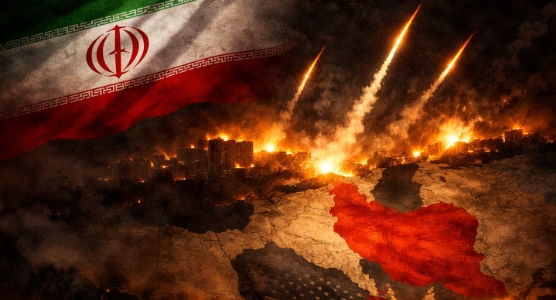
General Michel Yakovleff estimated on LCI that Iran had a decisive strategic advantage in the current confrontation with the United States, due to its capacity for endurance. “Iran knows how to suffer longer than America knows how to strike. (…) The power of a country is also its capacity to withstand”, he declared, judging that the American strikes would have no decisive effect: “after three weeks, it will not change anything”.
General Yakovleff: “Iran knows how to suffer longer than America knows how to strike” pic.twitter.com/S6WmcXbOyD
— Oumma.com (@oumma) March 24, 2026
The general also described an unfavorable balance of power in Washington: “Iran is a better arsonist than Trump is a fireman.” According to him, any de-escalation will now depend on Tehran, likely to impose “very, very harsh conditions”.
Editor’s note: The current situation illustrates the strategic stagnation of Donald Trump, whose decisions appear incoherent and counterproductive. By multiplying contradictory announcements and pursuing shifting war objectives, he has achieved no concrete results, while aggravating regional tensions. This headlong rush contributed to triggering a major energy crisis, particularly around the Strait of Hormuz, an essential artery of world trade. Today, Washington is demanding its reopening, even though the military escalation, encouraged with the support of Israel, directly contributed to its paralysis.
Caught in his own trap, Donald Trump appears incapable of regaining control of the situation. This sequence permanently tarnishes American credibility and establishes the image of an unpredictable and dangerous leader – to the point of being considered the worst president in the history of the United States by a growing number of observers.
At the same time, the Gulf allies, who have paid a high price — in hundreds of billions of dollars — for their security protection from Washington, could be tempted to profoundly review their strategic partnerships with the United States, faced with a power now perceived as unstable and incapable of guaranteeing the regional order that it claims to defend.
