
United Kingdom: in local elections, the Greens appeal to a Muslim electorate disappointed with Labor (center-left)
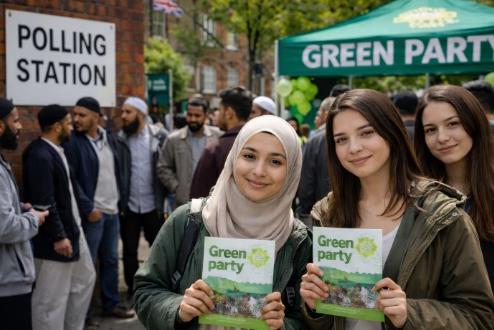
As local elections approach, an important political change is being confirmed in the United Kingdom: more and more Muslim voters are turning away from the Labor Party – a center-left party, historically close to the working classes and minorities – and turning towards the Greens. The war in Gaza played a triggering role, particularly after the refusal of certain Labor elected officials to call for a ceasefire. But it doesn’t explain everything. The figures, however, show the extent of the change: in 2019, around 86% of Muslim voters voted Labour, compared to only 40 to 45% today according to several recent polls (YouGov, More in Common).
On the ground, particularly in Newcastle, the main concerns remain the cost of living, insecurity, the deterioration of public services and the rise of the far right. Several studies show that these daily problems come before international issues, even if Gaza served as a trigger. Many voters denounce a feeling of abandonment by Labor, accused of no longer defending their interests. In some constituencies with a large Muslim population, the party lost tens of thousands of votes, sometimes by as much as 20 to 30 points, a sign of deep disenchantment.
The Greens appear to be a credible alternative, attracting a new generation of Muslim voters sensitive to social and environmental issues and the fight against racism. In certain areas, they are now gaining a significant share of this electorate, while facing competition from independent candidates. This change is also explained by a growing mistrust of speeches deemed insufficient in the face of the rise of racism. After the 2024 riots, many denounce a more hostile climate and a lack of appropriate political responses.
Finally, the Greens benefit from a reinforced local presence, supported by figures from the communities concerned and active on the ground. This proximity, associated with attention to everyday problems as well as international issues, is helping to gradually transform the British political landscape.
