Can you wear the hijab without being Muslim? The case
In Alabama, Jacey Abbott, who suffered from cancer, received caring messages from Muslim women. A collection was also launched to support this mother who is raising her three children alone.
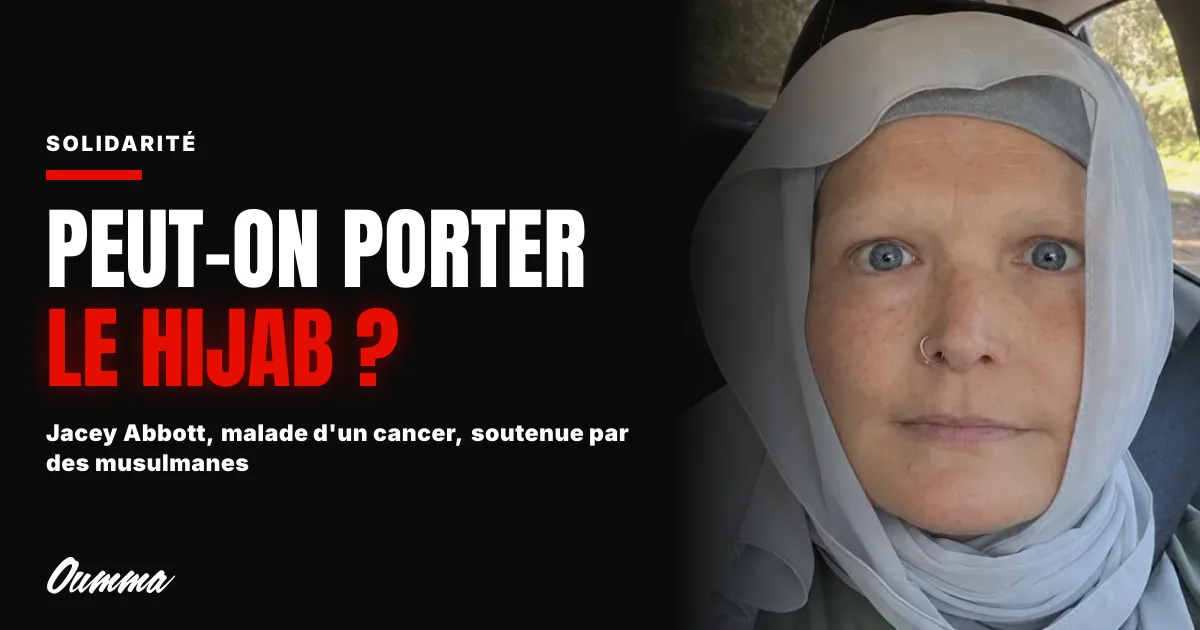
In southern Alabama, USA, Jacey Abbott, 41, lost her hair during treatment for breast cancer. On the social network Threads, she asked if she could wear a hijab, the scarf with which many Muslim women cover their hair, even though she herself is not of the Muslim faith. Her question sparked thousands of reactions, including responses from women who reassured her, advised her and sometimes offered to give her a scarf.
Since her cancer diagnosis in 2019, Jacey Abbott has tried several ways to cope with her hair loss. The wigs keep her hot and itchy. She also tried on hats and went out bareheaded, without feeling comfortable. In American daily life The Washington Postwho collected her testimony on November 13, she confides that losing her hair was, for her, even more painful than losing her breasts. washingtonpost.com
He liked the idea of a scarf. One question held her back, however. As she associated this way of covering the head with Islam, she feared disrespecting women who wear the hijab out of religious belief. Not knowing anyone of Muslim faith to talk to about it in person, she asked her question on Threads.
Among the first things that Internet users said to him, there was an unreserved yes. Several Muslim women explained to him that the headscarf they wore out of conviction could also be suitable for a woman who was simply looking to cover her head. Then they addressed the question that most directly affected Jacey Abbott’s daily life, that of comfort.
Suzanne Abdelhaq, an English teacher and author in Canada, recommended jersey for its softness. Other women showed her how to secure the fabric with pins. An Internet user even offered him a video call to show him the gestures. For a woman who had trouble with wigs, the choice of material was as important as the way the scarf was tied. washingtonpost.com
Safiyah Kilby, a 34-year-old Muslim, also gave some advice and assured Jacey Abbott that she would pray for her. Having suffered discrimination because of her religion, she said she was touched by the precaution of this stranger, who had taken the time to ask how her gesture would be perceived.
Scarves to offer and help for her three children
In Essen, Germany, Samiyah Intan Khoirunisah Zaily, who runs a small hijab business, offered to send scarves to Jacey Abbott for free. Other Internet users then wrote to the merchant to ask if they could contribute to the costs.
Support also took a form that the initial question hardly predicted. According to The Washington Postpeople who reacted to the message contributed several thousand dollars to a collection in favor of Jacey Abbott. This mother who raises her three children alone had to deal with a car breakdown. washingtonpost.com
Since these exchanges, Jacey Abbott has gone out several times in a headscarf. She says she finds it easy to wear and feels elegant in it. There have been so many gift suggestions that she already knows what she will do if she receives more scarves than she can wear. She will give some to other people with cancer.
It was Jacey Abbott herself who wanted to wear a scarf after losing her hair. The Muslim women who offered it to him responded to his request, in a gesture of solidarity. In the exchanges reported by The Washington Postnothing indicates a proselytizing approach or an attempt to convert her. This meeting between women of different convictions echoes a verse from the Koran which is addressed to all humanity: “We have made you nations and tribes, so that you may know one another” (surah Al-Hujurat49, verse 13).
