
The War of Sacrilege and the young Prophet Mohamed
“I supplied my uncles with arrows. » This is how the Prophet Mohamed remembers the war of Fijâr, “of Sacrilege”. It all begins with a murder, committed during a sacred month, on the route of a royal caravan. Quraysh and Kinâna then confront the tribes of Qays ʿAylân. And young Mohamed follows his uncles onto the battlefield.
A war during Mohamed’s youth
Mohamed was fourteen or fifteen years old, according to Ibn Hisham, when the Fijâr war broke out.1.
It opposes two camps. On the one hand, the tribe of Quraysh and those of Kinâna who are with it2. On the other, the tribes of Qays ʿAylân3.
A caravan under protection
It all starts from a man from the tribe of Hawâzin: ʿUrwa, nicknamed al-Rahhâl, “the great traveler”4.
ʿUrwa takes under his protection5 a caravan of goods. It belongs to al-Nuʿmân ibn al-Mundhir, an Arab king of Iraq6.
A man from Kinâna, al-Barrâd ibn Qays, from the Banû Damra clan7calls out to him.
“ Do you protect her, even against Kinâna? »
“ Yesreplies ʿUrwa. And against the whole world. »
The murder of Tayman Dhî Talâl
ʿUrwa sets off with the caravan.
Al-Barrâd also leaves. He follows him, and watches for the moment when ʿUrwa will lower his guard.
This moment arrives in Tayman Dhî Talâl, in the region of al-ʿÂliya8. ʿUrwa relaxes his vigilance. Al-Barrad pounces on him and kills him.
The murder takes place during the holy month9. This is why, explains Ibn Hisham, this war is called the Fijâr.
Al-Barrâd boasts of his act in a poem. He faced, he says, a terrible blow that frightened people before him, and he prepared for it with courage. With this blow, he destroyed the houses of the Banû Kilâb, the clan of his victim. He raised his hand against him at Dhû Talâl, and the man fell, reeling like a felled log.
The poet Labîd ibn Rabîʿa, from the same clan as ʿUrwa, also evokes his death in verse10. He asks a traveler to carry the news to the tribes of Banû Kilâb, ʿÂmir, Numayr, and Banû Hilâl, the maternal uncles of the dead man. The great traveler, he says, stopped forever at Tayman Dhî Talâl. Ibn Hisham specifies that these verses are taken from a longer poem.
The news reaches ʿUkâz
Someone comes to the people of Quraysh: “ Al-Barrâd killed ʿUrwa! »
Quraysh is then in ʿUkâz11in the middle of the holy month. The men of Quraysh leave immediately, without Hawâzin noticing.
Then the news reached the people of Hawâzin. They set off in pursuit. They catch up with them before they enter the sacred territory of Mecca12.
The two sides fight until nightfall. Then Quraysh enters the sacred territory, and Hawâzin stops the fight.
Days of battle
After this first day, the two camps meet again, several days in a row.
No single leader commands them. Each tribe of Quraysh and Kinâna has its own leader. Each tribe of Qays also has its own.
The arrows of the enemy
Young Mohamed attends some of these days. His uncles take him with them13.
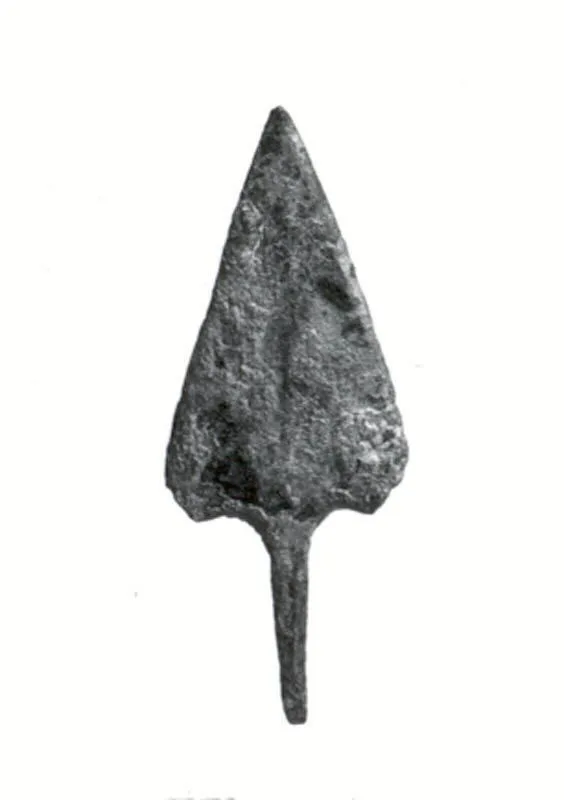
Later, the Prophet will narrate: “ I supplied my uncles with arrows. »
The text explains what it means. When the enemy shot at his uncles, he picked up the fallen arrows and brought them back to them.
Why “Sacrilege”?
Ibn Ishaq, the author of this story, gives another age. According to him, the Fijâr war broke out when Mohamed was twenty years old.14.
He also explains his name. It is called “the day of Fijâr” because the two tribes, Kinâna and Qays ʿAylân, allowed each other forbidden things.
A day that changes at noon
According to Ibn Ishaq, Quraysh and Kinâna are led by Harb ibn Umayya, from the clan of ʿAbd Shams15.
At the start of the day, Qays had the advantage over Kinâna. In the middle of the day, it was Kinâna who took the advantage over Qays.
Ibn Hisham adds a remark. The history of Fijâr is longer than what he said, he writes. If he did not tell it in full, it would have interrupted the story of the Prophet’s life.16.
According to the Sira of Ibn Hisham (chapter “The War of Fijâr”), itself taken from the biography of Ibn Ishaq. Story adapted into modern French: the chains of transmission and the genealogies have been removed, the poems are summarized; no facts were added to the story. The editorial notes provide context.
Cover image: a desert landscape in Najd, central Arabia (Richard Mortel, 2021, CC BY 2.0, via Wikimedia Commons), adapted by Oumma.
