Rohingya genocide: Burma condemned
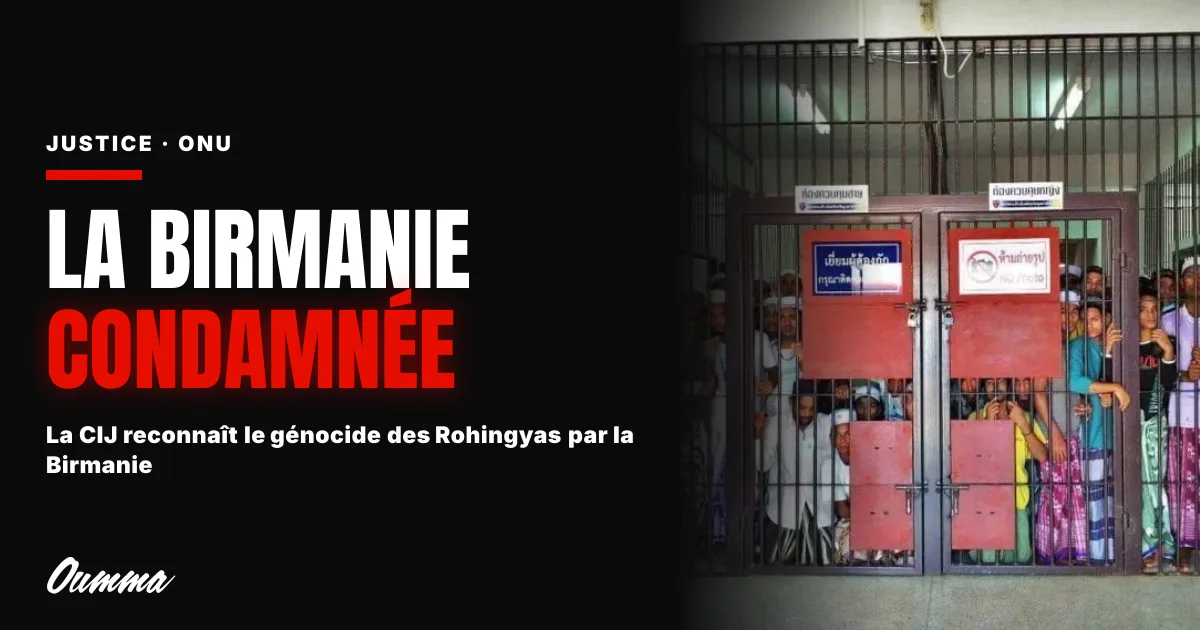
Nine years after the flight of hundreds of thousands of Rohingyas to Bangladesh, the International Court of Justice (ICJ), the main jurisdiction of the UN, recognized this Thursday, November 19, in The Hague, that Burma had committed genocide against this Muslim minority. This is the first time that the ICJ has ruled that a State itself committed this crime. For families driven from their villages in 2017, the ruling also recognizes their right to reparation and return.
It was Gambia, a West African country, which approached the Court in 2019. Both Gambia and Burma have joined the international convention which obliges states to prevent and punish genocide. This common commitment allowed The Gambia to bring the case before the judges, even though the violence took place thousands of kilometers from its territory. Eleven other countries, including France, intervened in the procedure.
Civilians attacked even as they fled
Before the Court, the Burmese authorities maintained that the 2017 military operations targeted insurgents. As reported by the American news agency Associated Press, the president of the ICJ, Yuji Iwasawa, detailed at the hearing the violence suffered by civilians. Burmese forces have killed thousands of Rohingya, committed widespread sexual violence and subjected children to extreme violence. They also attacked families who tried to flee.
To qualify as genocide, the judges had to establish that the perpetrators of these acts had intended to destroy the Rohingya, in whole or in part, as a group. By nine votes to six, the Court concluded that Burmese forces had acted with this intention in northern Rakhine State.
According to the British news agency Reuters, this is the fourth case of genocide recognized by international justice since the Holocaust, after those of Rwanda, Srebrenica in Bosnia and Cambodia. This figure designates four historical situations, each of which can give rise to several trials. The particularity of the judgment rendered in The Hague lies in the question posed to the judges: they had to rule on the responsibility of the Burmese state itself.
What Burma owes to Rohingya families
In its ruling, the ICJ ordered Burma to investigate anyone reasonably suspected of having participated in the crimes and to prosecute where the evidence so warrants. It also notes that the Burmese authorities failed to fulfill an obligation imposed in January 2020, while the procedure was underway. The judges had asked them to take measures to preserve evidence of the violence.
For refugee families in Bangladesh and those who had to flee elsewhere in Burma, the judgment specifies the conditions of return. Everyone must be able to choose to return to their former place of residence, in safety and with dignity. The Burmese authorities must also allow members of the same family separated during the exodus to reunite. The amount of compensation will be set at a later stage of the procedure. Burma has two years to present to judges the measures it has taken and specify how it intends to compensate the victims. For families who wish to return to their village, one question remains open: when will they be able to return there safely?
Subscribe to the Oumma letter: our articles, our analyzes and our new programs arrive directly in your mailbox.
Free. One-click unsubscribe. Everything you need to know about Umma’s letter
