
Amazon accused of failing to keep promises to its migrant workers in Saudi Arabia
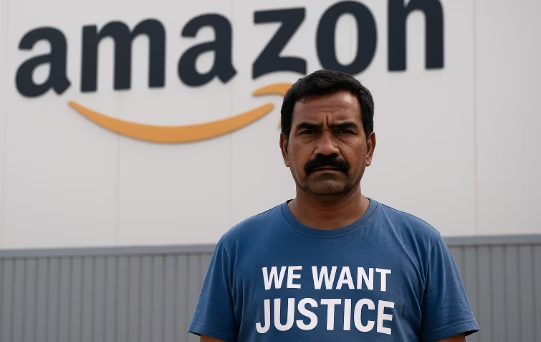
Two years after committing to compensate its migrant workers for the abusive recruitment fees they had to pay, Amazon is accused of not having kept its word. Dozens of workers from Nepal, India, Bangladesh, Pakistan and Kenya say they have still received nothing, despite promises from the multinational.
In 2023, the American giant admitted that thousands of workers recruited by subcontractors for its warehouses in Saudi Arabia had paid between $800 and $2,300 to agencies to obtain their jobs – a practice contrary to UN standards and the company’s own standards. Amazon then promised to reimburse these amounts and paid approximately $2.6 million to nearly 950 workers. But even today, many of them are waiting for their due. “Don’t take us for idiots. We are not begging, we are demanding justice,” says Rameshwar Sharma, a Nepalese worker still without news of his reimbursement.
According to Amnesty International, these delays are “unacceptable” for a company whose profits run into the billions. “Every day of delay prolongs the suffering of these workers,” said Ella Knight, labor rights specialist at Amnesty. Amazon ensures that it will continue the refund process “as quickly as possible”. But for many, doubt sets in. “This sum is derisory for Amazon, but for us, it is a life,” summarizes Bangladeshi MD Foisal Mia, who had to go into debt to pay his recruitment costs.
Beyond the figures, this affair exposes the structural cynicism of an economic empire built on the exploitation of the most vulnerable. Amazon, which boasts endless reports about its social responsibility and ethical standards, in reality leaves poor workers begging for restitution of paltry sums compared to its colossal profits. This double discourse illustrates a well-established logic: cloaking oneself in morality when the media spotlight shines, then falling back into silence as soon as public attention fades. Behind the ultra-modern warehouses and the slogans about innovation, it is still broken lives that are paying the real price of Amazon-style globalization.
