
Australia: after the anti-Semitic attack in Bondi, Islamophobic acts increase but Muslims favor solidarity over victim discourse
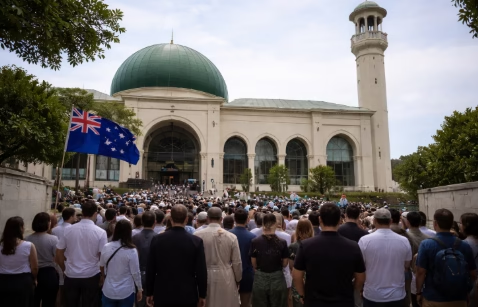
A wave of Islamophobic acts has hit Australia since the anti-Semitic attack in Bondi, which left fifteen people dead during an event celebrating Hanukkah. In the space of a week, Islamophobia Register Australia – an independent organization responsible for collecting and documenting Islamophobic acts nationally – recorded 126 reports, ten times more than in previous weeks. Insults, threats, hateful phone calls, gestures mimicking weapons: verbal attacks are increasing, particularly against Muslim women identifiable by wearing the hijab. Some say they no longer dare leave their homes. Mosques have increased their security, while worshipers reduce the time spent at prayer sites for fear of attacks.
In the days following the attack, acts of desecration were also reported: pig heads placed at the entrance to a Muslim cemetery in Sydney, graffiti targeting a mosque in Queensland and an Islamic school in the state of Victoria, and even online calls for racist violence on Cronulla beach. Despite this tense climate, Muslim leaders refuse any logic of withdrawal. “There is fear, but the community is resilient. We will not seek to pose as victims,” they affirm, while calling for more responsible public speaking.
A refusal of the victim discourse in the name of living together
This positioning reflects above all a desire not to add division to division. By refusing the victim discourse, Muslim leaders seek to preserve a common framework, based on solidarity with Jewish victims and the refusal of amalgamations. The challenge is to remember that the fight against anti-Semitism and that against Islamophobia come from the same fight: that against racial and religious hatred, whatever the community targeted.
A symbolic gesture also made an impression: at the Masjid Al-Hidayah mosque in Rockdale, a menorah – an emblematic candlestick of Judaism associated with the festival of Hanukkah – was lit in homage to the Jewish victims. A clear message: refuse divisions and affirm that human dignity must take precedence over the logic of stigmatization.
