
British halal meat attracts European markets
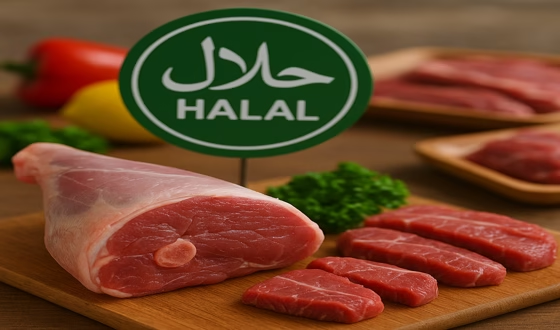
Faced with growing demand in Europe, particularly in France and Germany, British halal meat has established itself as a benchmark for quality, traceability and respect for religious rites. Thanks to a well-structured and certified sector, the United Kingdom has been able to meet a dual requirement: that of Muslim consumers concerned with religious conformity, and that of professional buyers requiring high guarantees in terms of food safety and animal welfare. British exporters now offer a diversified offering, particularly in halal lamb, a flagship product on European markets. They know how to adapt their cuts and packaging to the needs of different circuits – mass distribution, catering or local commerce – while guaranteeing a regular and transparent supply.
A dynamic driven by confidence and market growth
The success of British halal meat is based on the confidence inspired by its certification system, but also on a rapidly expanding market dynamic. According to a study by Market.us (2024), the European market for processed halal meat could increase from 13.7 billion dollars in 2023 to almost 29 billion in 2033, an annual growth of 7.9%. This progression reflects both the increase in Muslim populations and a broader interest in products perceived as more ethical, hygienic and traceable.
The United Kingdom also benefits from a historical advantage: its recognized breeding breeds and its high production standards, which allow it to position itself in the “premium” halal segment. A study from the University of Huddersfield, published in 2024, estimates that the halal meat/chicken sector already represents almost 15% of the total value of slaughter in the UK, or around £1.7 billion, with a projection of £2 billion by 2028.
Between strengths and challenges
Although British halal meat is attractive for its quality and reliability, certain challenges persist. The diversity of certification bodies, divergences on the question of stunning before slaughter or even the effects of Brexit on logistics sometimes complicate exports. But despite these obstacles, the United Kingdom remains seen as a trusted supplier, capable of reconciling religious requirements, taste quality and transparency – a rare and valuable combination in a booming European halal market.
