
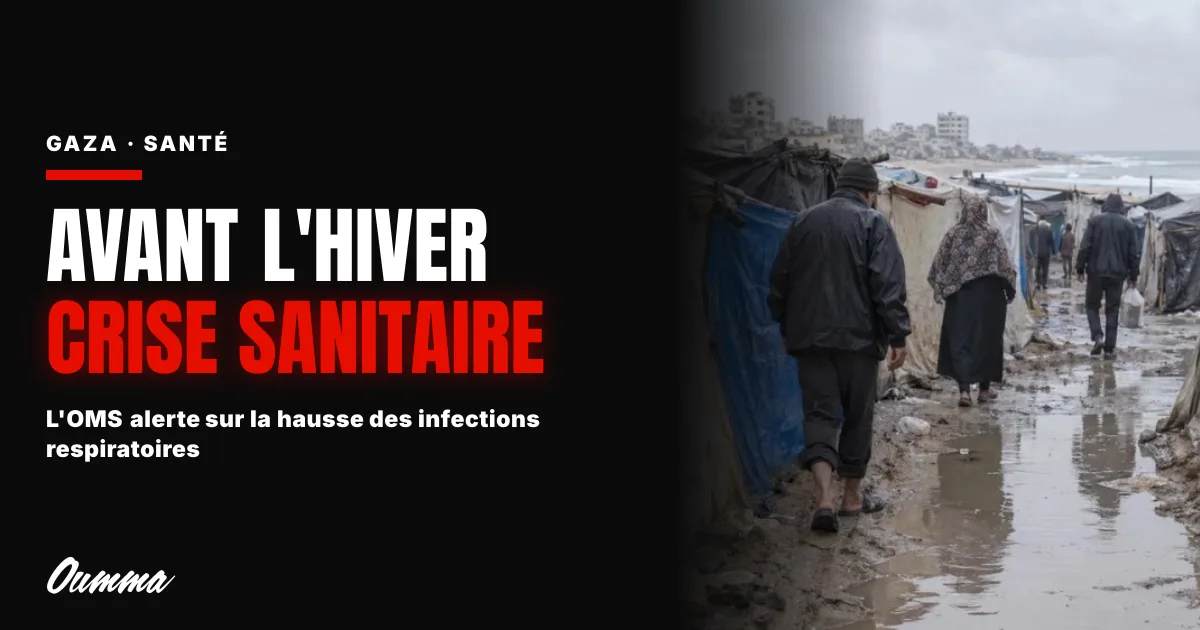
Gaza: WHO warns of rising infections
In Gaza, families driven from their tents by the rains huddle together in shelters that are still dry, where promiscuity facilitates the transmission of viruses. Acute respiratory infections now represent 11% of medical consultations. The World Health Organization (WHO) fears a worsening as winter approaches.
During a press briefing on Friday, November 13, Dr. Reinhilde Van De Weerdt, WHO representative in the occupied Palestinian territory, reported 33,000 more cases of acute respiratory infections than the same period in 2025, according to comments reported by Reuters. November rains have already forced displaced families to leave their shelters. The WHO representative is concerned about the conditions in which they will have to spend the coldest months.
When one tent takes on water, families huddle together under another
Nearly a million displaced people live in areas of the Gaza Strip exposed to flooding. Of these, around 400,000 are in areas where the WHO considers the risk extremely high. When a family has to abandon a flooded tent, they look for a place in a shelter that is sometimes already occupied. With several people under the same roof, it becomes difficult to keep your distance from a loved one who is coughing. And when the rain comes in, ventilating also means letting the cold penetrate. This confinement promotes the circulation of respiratory viruses, explained Dr. Van De Weerdt.
The heavy rains which fell on Gaza from November 6 demonstrate this precariousness. In three days, teams responsible for monitoring displacement sites received 473 alerts. According to initial estimates from the United Nations Office for the Coordination of Humanitarian Affairs (OCHA), more than 46,000 households, or some 226,000 people, have been affected. More than 5,000 households are said to have slept without shelter. This assessment, established from field reports, remains provisional.
For families whose tent is still standing, it is sometimes necessary to replace a torn tarp or find dry blankets. OCHA reports that the rising price of tarpaulins is pushing some families into debt. Humanitarian organizations themselves have few reserves to help them. By November 8, they were reporting that their stocks of tents, tarpaulins, blankets and clothing inside Gaza were almost exhausted.
Laboratories lacking equipment
The bad weather also reached places of care. Humanitarian teams received reports of damage in nine health facilities, the extent of which remained to be confirmed. At the same time, the WHO reports continued difficulties in transporting laboratory equipment to Gaza. Doctors are seeing an increase in the number of patients with respiratory symptoms. To know which infectious agent is circulating and quickly identify an epidemic outbreak, they must also be able to have samples analyzed.
In an appeal published on November 13, humanitarian officials called for speeding up the entry of supplies needed for the winter. Their request concerns diagnostic equipment and medicines, but also pumps to evacuate water, fuel to operate them and sandbags to protect shelters. The plan also includes helping families who want to move out of a damaged building or flood-prone property. For those who have just lost their tent, the priority remains finding a dry place to sleep the next night.
Subscribe to the Oumma letter: our articles, our analyzes and our new programs arrive directly in your mailbox.
Free. One-click unsubscribe. Everything you need to know about Umma’s letter
