
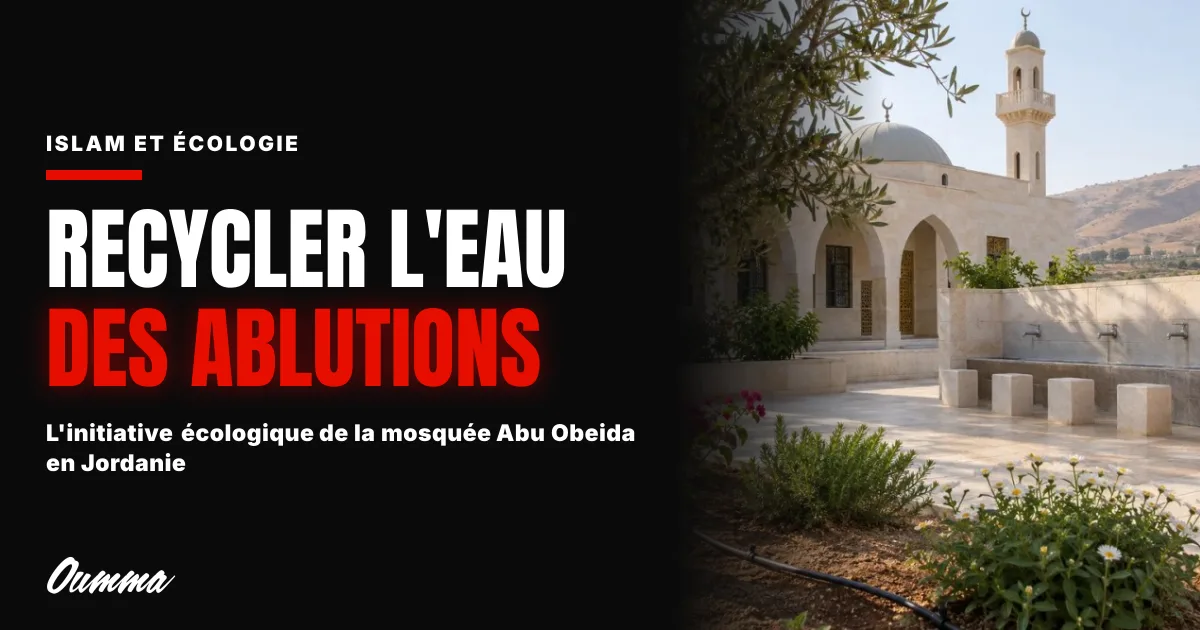
Jordan: a mosque reuses ablution water
In Deir Alla, in the Jordan Valley, the trees and flower beds surrounding the Abu Obeida mosque are watered with water from ablutions, reports the Guardian in a report published on November 10. In this arid region of Jordan, the water used by the faithful to prepare for prayer finds a second use a few meters from the prayer room.
According to the Guardianpipes installed under the taps collect the water before it enters the sewers. It passes through five layers of sand and gravel, then a network of pipes distributes it drip by drop, at the foot of the plantations. The garden can thus be maintained without drawing on the municipal network. The economy counts in a country where, recalls the British daily, certain homes are only supplied with water for a few hours per week.
Questioned by the GuardianAhmed al-Rawsan, founder of the Jordanian association which manages the installation, explains that the project also responds to an educational ambition. Residents already know the value of water, the scarcity of which they experience on a daily basis. At the mosque, they can see what the effort to preserve it produces. Coming out of prayer, all they have to do is look at the garden.
What Islam says about waste
In the surah Al-A’rafthe Koran invites you to eat and drink with moderation (7, 31). Another surah, Al-An’amaddresses the same question at harvest time. Verse 141 mentions gardens, palm trees, olive trees and pomegranate trees. He invites you to enjoy their fruits, to give their due share on harvest day and to avoid waste. Preserving a resource and ensuring its sharing appear here as two closely linked responsibilities.
The prophetic tradition gives this idea a dimension that goes beyond human needs alone. In a hadith reported by Al-Bukhari, the Prophet teaches that when a Muslim plants a tree or sows a seed, what a person, bird or other animal eats from it counts as alms for him. The image speaks for itself. He who plants a tree does not know who, one day, will pick its fruits. Even the bird that comes to feed there gives its gesture a spiritual value.
In Cambridge and Jakarta, two other ways of acting
In England, the central mosque in Cambridge incorporated these concerns from its design. Large openings in the roof naturally light the prayer room. Photovoltaic panels produce part of the electricity, while heat pumps provide heating and cooling for the building. The mosque also collects rainwater to meet two ordinary needs, watering the garden and flushing toilets.
In Jakarta, Indonesia, the Istiqlal Grand Mosque took the opportunity of a renovation to reduce its water and energy consumption. In 2022, its managers estimated that the solar panels installed on site would cover around 13% of its energy needs. That same year, Istiqlal became the first place of worship in the world to achieve EDGE final environmental certification, which assesses the efficiency of buildings. In Cambridge, the approach can be seen in the architecture. In Jakarta, she guided the renovation of a major national building. In Deir Alla, it focuses on a more modest question, which many other mosques could ask themselves when looking at their own garden: what water should they use to make it live?
Subscribe to the Oumma letter: our articles, our analyzes and our new programs arrive directly in your mailbox.
Free. One-click unsubscribe. Everything you need to know about Umma’s letter
