
Germany leads new era of halal tourism in Europe
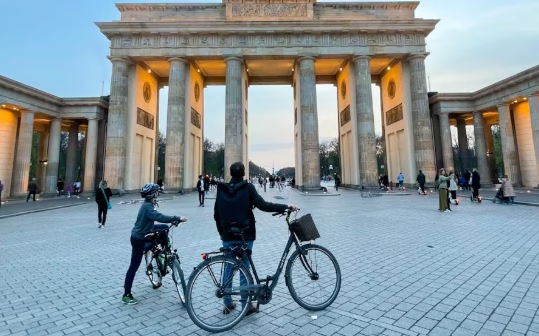
Germany joins Spain, Croatia, Greece and Sweden in a movement that is redrawing the map of European tourism: the development of halal tourism. These countries are banking on an offer designed for Muslim travelers, with halal-certified meals, prayer spaces and family accommodation, without sacrificing comfort or cultural discovery. This development reflects a change in outlook on travel. It is no longer just a question of attracting customers, but of creating a welcoming environment, where diversity and respect for religious practices combine naturally.
Germany, for example, launched its Halal Travel Guideavailable in English and Arabic, to facilitate the stay of visitors from the Gulf or other Muslim countries. Berlin, Hamburg and Frankfurt are now increasing the number of halal restaurants and adapted hotels. In Spain, tourist authorities promote Andalusian heritage and the culture of living together. Croatia focuses on its unspoilt coasts and hospitality, while Greece combines spirituality and heritage. Even Sweden, often discreet on the subject, is committed to making its Nordic cities and landscapes more accessible to Muslim travelers.
An economic and cultural strategy
Behind this dynamic lies a double logic. Economic first: the halal tourism market represents more than 220 billion dollars globally and continues to grow each year. By positioning themselves early, these European countries are seeking to capture a share of this promising market. But this openness is also cultural: it testifies to a Europe more aware of its diversity, which chooses to value respect for differences rather than exclusion.
By focusing on halal tourism, these States are not just adapting their offer: they are affirming a vision of travel based on tolerance, curiosity and dialogue of cultures. An encouraging sign in a global context where inclusion is becoming, more than ever, a condition for progress.
