
In New York, Zohran Mamdani takes an oath on a Koran and marks a symbolic turning point
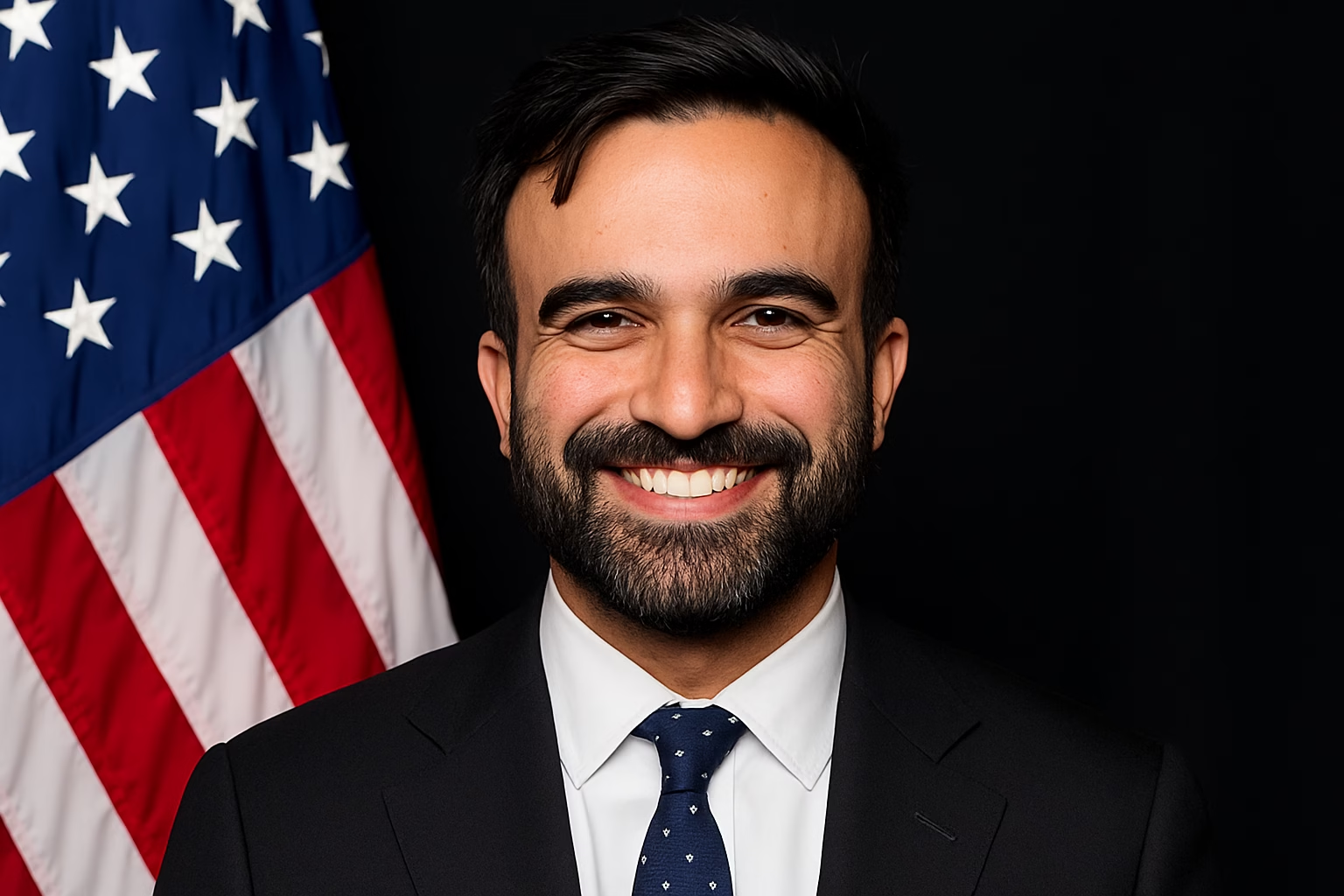
THURSDAY, Zohran Mamdani made American political history by becoming the first mayor of New York City to take an oath on the Quran. A gesture with a strong symbolic charge, accomplished during a private ceremony organized in a former disused subway station under Times Square, just a few meters from the tumult of Manhattan.
For this solemn moment, the new mayor chose two works deeply linked to his personal history and that of the city. On one side, a Koran that belonged to his grandfather. On the other, a copy dating from the 19th century, loaned by the New York Public Libraryand known as the “Schomburg Koran”. This manuscript, of a modest format and designed for daily use, symbolizes an Islam lived as close as possible to people, far from fixed or spectacular representations.
This historical Quran comes from the collection ofArthur Schomburga major intellectual of the Harlem Renaissance and a central figure in black American memory. Born in Puerto Rico to Afro-Caribbean and German parents, Schomburg moved to New York in the early 20th century and dedicated his life to documenting the history and cultures of the African diaspora. In 1926, he sold more than 4,000 books to the town library, giving rise to what would become the Schomburg Center for Research in Black Culture. For the institution, the choice of Zohran Mamdani thus echoes a broader history of struggles for recognition, knowledge and dignity.
A second ceremony, public this time, is planned for Friday at city hall. Zohran Mamdani will take the oath again, using two other Korans that belonged to his grandparents. Here again, the gesture is intended to be intimate and political at the same time, placing the exercise of municipal power in an assumed family and spiritual continuity.
If New York law does not require any religious text for taking office, tradition dictates that many mayors place their hand on a Bible. Before him, Michael Bloomberg had used a century-old family Bible, while Bill de Blasio had chosen a Bible that belonged to President Roosevelt. More recently, Eric Adams had also taken an oath on a family biblical text. The choice of Mamdani is therefore part of this continuity, while shifting it into another religious and cultural history.
The first Muslim and South Asian mayor of the largest city in the United States, Zohran Mamdani never sought to diminish his identity. Born in Uganda, from a family of committed intellectuals, he made New York’s diversity and the fight against discrimination a central axis of his campaign. In several videos that have gone viral, he returned to the trauma of September 11, 2001 and the rise of Islamophobia that followed, while giving voice to ordinary residents of the city, particularly from Muslim and immigrant communities. His strong positions on social justice, as well as his criticism of Israeli policies and the genocide in Gaza, have earned him violent attacks. The Republican representative Elise Stefanik went so far as to describe him as a “jihadist communist”, repeating rhetoric widely denounced as Islamophobic.
In the face of these attacks, Mamdani remained steadfast. During a campaign speech, he said: “I will not change who I am, nor the way I live, nor the faith I claim. I will no longer hide in the shadows. I will stand in the light. » His oath on the Koran, far from being a simple symbol, appears today as the political translation of this promise.
