
Islamic finance: British “halal” funds invest in companies linked to the genocide in Gaza
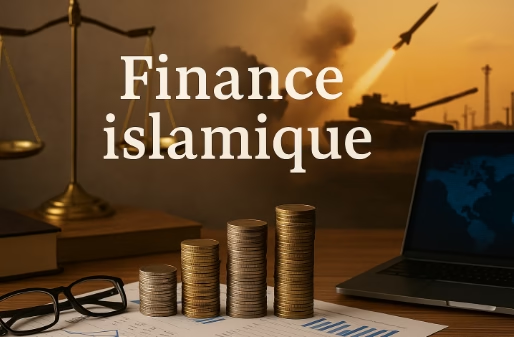
According to an investigation by the media Hyphen (September 23, 2025), more than $1 billion from so-called sharia-compliant funds and pensions are invested in companies accused of contributing to the Gaza genocide and the occupation.
Six major Islamic funds — HSBC Islamic Global Equity Index Fund, iShares MSCI World Islamic UCITS ETF, iShares MSCI USA Islamic UCITS ETF, Wahed FTSE USA Shariah, Schroder Islamic Global Equity Fund and Saturna Al-Kawthar Global Focused Equity UCITS ETF — hold or have held shares in companies supplying fuel for fighter jets, missile components, surveillance technologies or even donating to the Israeli army.
Among the companies targeted are Microsoft and Google (Alphabet), accused of providing the Israeli army with cloud and artificial intelligence services as part of the Project Nimbus contract. Other groups like Valero Energy Corporation (hunter fuel), Axon Enterprises (Tasers used by Israeli police), Monster Beverage Corporation (donation to Friends of the IDF), Booking Holdings (listing of properties in the colonies), Honeywell International (missile component found on a bombed school), Cisco, Amazon and Motorola complete the list. In total, Hyphen estimates the shares held in these ten companies at $1.73 billion, or nearly a quarter of the combined value of the funds studied.
British Muslim leaders denounce a serious ethical breach and call for an urgent strengthening of Islamic compliance criteria to prevent halal savings from benefiting the Israeli occupation. Labor MP Abtisam Mohamed deplores “a sector ready to sacrifice its integrity for profit” and asks the financial regulator to investigate.
Fund managers admit that current standards often limit themselves to excluding alcohol, gambling or conventional weapons, without addressing human rights violations. Voices, like that of Umer Suleman (Wahed), ask to include in the criteria the ban on supporting any company involved in war crimes or the occupation of Palestinian territories. A Sharia-compliant investment (sharia-compliant) is supposed to respect the principles of Islamic finance: prohibition of interest (riba), exclusion of illicit sectors (haram), risk sharing and purification of non-compliant revenues. Presented as ethical and halal, it allows Muslims to invest in accordance with their faith.
This gray area is today raising a fundamental debate within Islamic finance: more and more scholars and experts are calling for broadening the compliance criteria to include respect for human rights, protection of the environment and non-participation in war crimes. They believe that a financial product cannot really be qualified as halal if it contributes, even indirectly, to repression or armed conflicts.
