
Malaysia confirms its global leadership in the halal economy
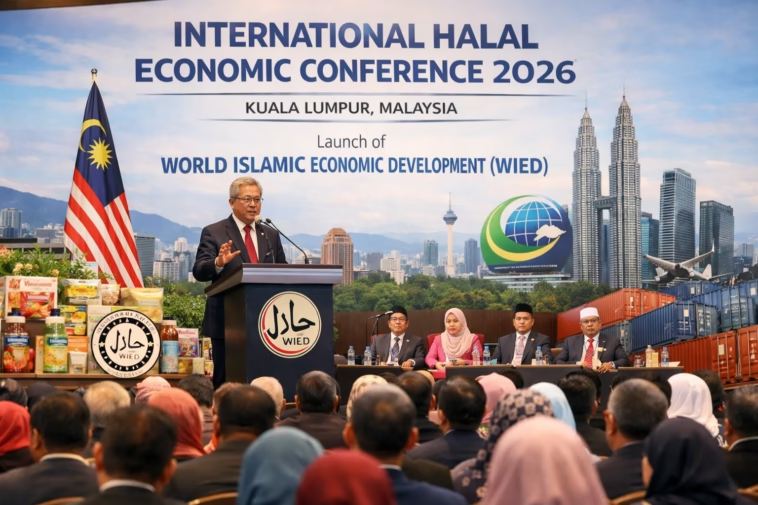
There Malaysia continues to strengthen its position as a major player in the halal economy on an international scale. This ambition was reaffirmed during the International Halal Economic Conference 2026, a major event which brought together politicians, business leaders, experts and financial institutions from many countries. On this occasion, Malaysia also launched a new global initiative called World Islamic Economic Development (WIED)intended to structure and boost the halal economy at a global level.
The official opening of the conference was ensured by the Deputy Prime Minister II, Fadillah Yusofwho recalled that halal is not limited to a simple economic label. According to him, it is above all a commitment based on values of trust, responsibility and justice, in the service of the whole of society.
A growing halal economy
Today, the halal economy has become a real engine of growth for Malaysia. In 2025, it represented 7.94% of gross domestic productor approximately 118.2 billion ringgit. This figure illustrates the strategic importance of the sector, which already supports more than 1,500 registered halal exporters in the country.
Contrary to some popular belief, halal does not only concern food. It encompasses many areas such as Islamic finance, pharmaceuticals, cosmetics, logistics, tourism, technology and even energy. Globally, the halal economy is now estimated to be nearly 40 trillion dollarscovering more than 90 key sectors.
Malaysia benefits from solid assets to position itself as a global benchmark. Its halal certification system is recognized internationally, in particular thanks to the central role played by religious authorities and the standards aligned with the standards of the Organization of Islamic Cooperation. The country also recognizes more than 90 foreign halal certification bodies, facilitating trade and building consumer confidence.
For Malaysian authorities, halal is not only an economic opportunity. It is also a guarantee of quality, transparency and respect for ethical rules, values increasingly sought after by consumers, Muslims and non-Muslims alike.
A global and sustainable vision for the future
The launch of the World Islamic Economic Development marks a new stage in this strategy. This initiative aims to better coordinate the efforts of countries, businesses and financial institutions to reduce the current fragmentation of the halal economy. The objective is clear: to build a more coherent, more sustainable and more inclusive framework on a global scale.
At the same time, Malaysia is preparing its National Halal Policyexpected for 2026. This strategic document should serve as a roadmap for developing a complete halal ecosystem, ranging from research to innovation, including training, investment and governance. Particular attention is paid to small and medium-sized businesses, in order to facilitate their access to certification and international markets.
The authorities also recalled the importance of control and compliance with standards. Between 2023 and 2025, several hundred complaints related to halal were processed, with seizures and sanctions to protect consumers and preserve the credibility of the label.
By 2030, Malaysia aims to increase the value of its halal industry to more than 230 billion ringgitto significantly increase its exports and increase the sector’s contribution to 10.8% of GDP. This vision is part of a long-term approach, where halal is seen as a heritage to be passed on to future generations.
By reaffirming its leadership and calling for strengthened international cooperation, Malaysia wishes to show that the halal economy can be efficient, ethical and beneficial for the whole world.ggg
