
Saudi Arabia: launch of an “Islamic chatbot” by the Humain company
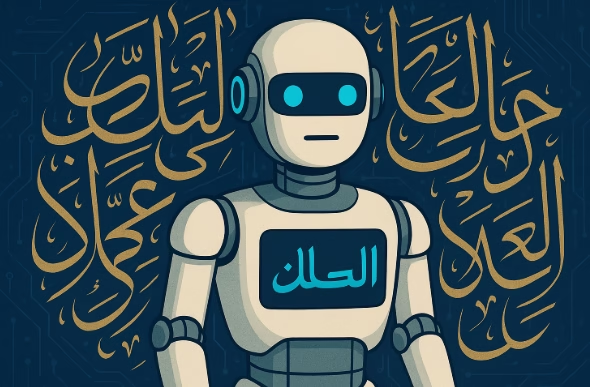
The Saudi company Humain, supported by the kingdom’s sovereign wealth fund, has unveiled a new conversational agent called Human Cat. Powered by its Allam language model, presented as one of the largest Arabic data sets ever assembled, the tool aims to be “fluid in Islamic culture, values and heritage”. Available first in Saudi Arabia before a regional and then global deployment, the chatbot can converse in Arabic and English, including certain dialects such as Egyptian or Lebanese. Human highlights training in “deep alignment with Islamic and Middle Eastern nuances”, where Western models like ChatGPT are described as calibrated to Western cultural references.
With this launch, Saudi Arabia intends to establish itself in the regional race for artificial intelligence, alongside Abu Dhabi which recently presented its own Arab model, Falcon. The initiative is part of a broader desire to develop local digital infrastructures and offer services in Arabic to a population of more than 380 million speakers.
Beyond technological innovation, Human Cat illustrates the strategic dimension of artificial intelligence in the Middle East. Mastering linguistic patterns rooted in Islamic culture is not only an economic issue: it also reflects a battle for cultural and ideological influence against the dominance of English in global AI. By integrating Islamic and Arabic references into the design of digital tools, Riyadh seeks to assert its leading role in defining a “localized” technological future, where AI would no longer be perceived as a Western import but as a product rooted in its own universe of values.
