United States: When art reopens the dialogue between Jews and Muslims
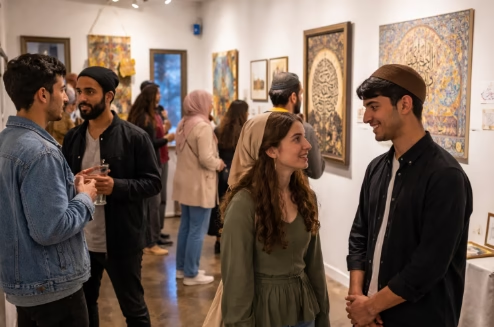
In Metuchen, New Jersey, a discreet but deeply symbolic exhibition attempts to recreate connections where tension dominates. Open Archways: by the light of the same moonco-curated by Hannah Finkelshteyn, Jewish, and Aakef Khan, Muslim, brings together fifteen artists from both traditions around a simple idea: to meet, create together and agree to talk to each other, despite the fractures rekindled since October 7.
Born on the Rutgers campus, in a climate marked by fear, isolation and polarization, the initiative chooses art as a neutral, almost protective space. The works presented – paintings, textiles, calligraphies or installations – address heritage, memory and identity, highlighting often forgotten points of convergence, such as the common relationship to the lunar calendar, without dodging disagreements or pain. The heart of the project, however, is not just on the gallery walls. It was built in exchanges between artists, during meetings organized before the exhibition. Everyone shared their journey, their relationship to faith, to exile, to transmission or to the fear of being reduced to an identity. These discussions, sometimes uncomfortable, allowed us to move away from a logic of confrontation and into more human listening, far from social networks and their brutal simplifications.
This experience says something about the current political and cultural moment. At a time when any attempt at dialogue is often suspected of naivety, even treason, Open Archways takes another path: that of the small-scale link. Neither manifesto nor forced “normalization” undertaking, the exhibition shows that coexistence does not always involve grand declarations, but through concrete, fragile, imperfect relationships. In a context saturated with violent discourse and irreconcilable camps, these “small bridges” may seem insignificant. However, for many, they are one of the rare spaces where we can still look at others as human beings.
