
Why Saudi Arabia suspended 1,800 Umrah travel agencies
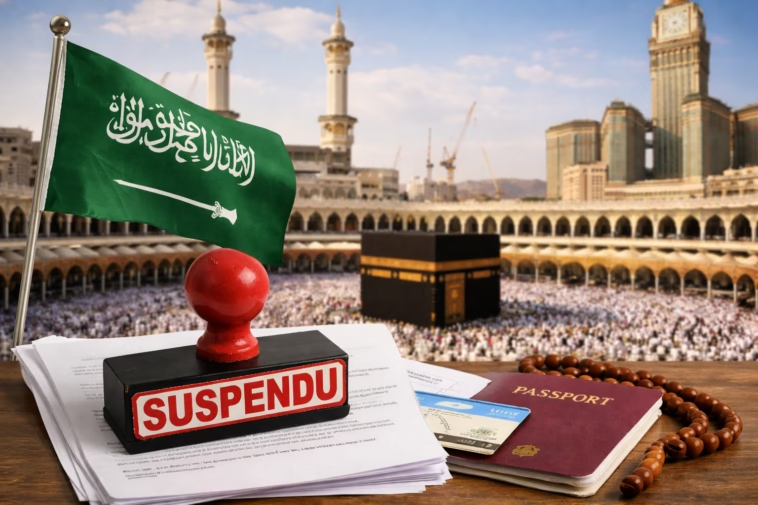
Saudi Arabia suspends 1,800 Umrah travel agencies to ensure quality and safety of pilgrims.
WHY READ:
- Understand the reasons behind this massive suspension.
- Discover the implications for travel agencies and pilgrims.
- Analyze the ongoing reforms in the Hajj and Umrah sector.
L’Saudi Arabia recently took a strong decision: 1,800 international travel agencies specializing in Umrah (small pilgrimage) were suspended. This represents almost a third of the agencies authorized to work in this market. This measure surprised many professionals and pilgrims, but it is part of a clear desire: to better regulate the organization of religious pilgrimages.
Quality problems and non-compliance with rules
According to the Saudi authorities, these suspensions follow regular checks carried out with partner agencies. Inspections revealed several problems: non-compliant accommodation, incomplete services, lack of assistance to pilgrims and even non-compliance with contractual commitments.
For Riyadh, these failings are not acceptable. Umrah attracts millions of devotees from all over the world every year. Their safety, comfort and the smooth running of their stay are considered a major responsibility.
Protect pilgrims above all
The message from the authorities is simple: the pilgrimage is not an ordinary tourist trip. This is an important religious act, which requires serious and rigorous organization. By suspending agencies deemed to be failing, Saudi Arabia wants to protect pilgrims from abuse and bad practices.
The suspension is not necessarily permanent. The agencies concerned have a period of time to correct their errors. If they comply with the rules, they will be able, in certain cases, to resume their activity.
The authorities specify that pilgrims who have already obtained a visa or confirmed their trip are not affected by these suspensions. Current trips must take place normally, in order to avoid any disruption for the faithful.
A sector in full transformation
For several years, Saudi Arabia has undertaken a profound reform of the Hajj and Umrah sector. The State has taken over the management and marketing of packages via official platforms. Result: traditional agencies have less room for maneuver and must respect much stricter rules.
This new organization aims to centralize the system, improve transparency and limit abuses. But it also puts certain agencies in difficulty, particularly the smallest or those struggling to adapt.
In France, the Dogan Voyages case
In this tense context, the situation of Dogan Travel illustrates the difficulties of the sector. This Lyon agency, specialized for more than thirty years in pilgrimages to Meccaannounced at the end of December the cancellation of all its departures.
A few weeks later, she was deregistered by theAPSTthe organization that protects travel agency customers. Management failed to show up for a scheduled hearing, leading to this decision. Since then, the agency seems to have ceased all activity: premises closed, website unavailable and customers without response.
A stricter future for agencies
Even if no direct link is officially established between the Saudi reform and this specific case, these events show a sector under great pressure. In the future, only strong, well-organized agencies that strictly follow the rules will be able to continue offering pilgrimages.
For pilgrims, the stated objective remains clear: to travel in better conditions, with more security and fewer unpleasant surprises.
